
White paper: Supply chain
Compelling opportunity for tech that makes supply chains more flexible, resilient

Through centuries of industrial and technological development, supply chains have evolved to become incredibly complex. This complexity has resulted in supply chains that tend to be rigid and fragile. Small changes in and around supply chains can break them in often unanticipated ways and cause chain reactions that disrupt vital economic engines.
As a result, supply chain stakeholders are especially fearful of change. This fear has slowed supply chain evolution and hindered profitability even as other areas of the economy race ahead. Supply chains need to become more flexible and resilient to keep pace.
We think technologies that help supply chain stakeholders reduce the risk from internal and external changes will be increasingly valuable as industry players feel pressured to keep pace with rapid developments in AI, geopolitics and the broader economy.
These technologies enable flexibility and diversification in geographic sourcing, transportation, supply chain operations and supply sourcing. We examine solutions that support supplier diversification and briefly profile six companies providing such technologies.
TABLE OF CONTENTS
- Supply chains have become incredibly complex
- Supply chain disruptions are expensive
- Managers have minimized supply chain disruption by avoiding change…
- … but avoiding change is no longer an option
- The path to resilience and flexibility
- Supplier diversification solutions
- Looking ahead
- Company profiles: Axya, Coldcart, ColdTrack, GoodShip, SmartDocs and Zapro
Supply chains have become incredibly complex
Supply chains manage the flow of goods from production through final sale. They are foundational for modern society, touching virtually every aspect of life. The supply chain ecosystem includes raw material suppliers, manufacturers, distributors, retailers and consumers. Raw material suppliers provide essential inputs such as agricultural products, minerals and chemicals. Manufacturers use raw materials and produce finished goods. Distributors to wholesalers, such as Sysco, Performance Food Group and McLane manage storage and transportation, bridging the gap between manufacturers and retailers. Logistics providers like DHL and C.H. Robinson help ensure efficient movement of goods throughout the supply chain. Retailers, including industry leaders like Walmart, Amazon and Costco, stock and sell products directly to consumers. From start to finish, a single supply chain can include dozens or even hundreds of companies, making supply chains incredibly complex.
Supply chain disruptions are expensive
The complexity of today’s supply chains makes them extremely sensitive to changes in market conditions, supply and demand, technology and economic policies. Common supply chain disrupters include natural disasters, geopolitical conflicts, supply and supplier shortages, cybersecurity breaches, technology failures, transportation disruptions, health crises, demand fluctuations, labor shortages, and regulatory changes. Over the past decade, supply chain participants have been subject to a seemingly nonstop series of macro changes and disruptions, including geopolitical conflicts, the COVID-19 pandemic, and tariff actions under the Trump Administration. Because supply chains are highly interconnected, the effect of even small changes has the potential to reverberate broadly through the economy and society.
TABLE 1: The share of political risk events that are unexpected: 2021 versus 2025

Source: EY-Parthenon.
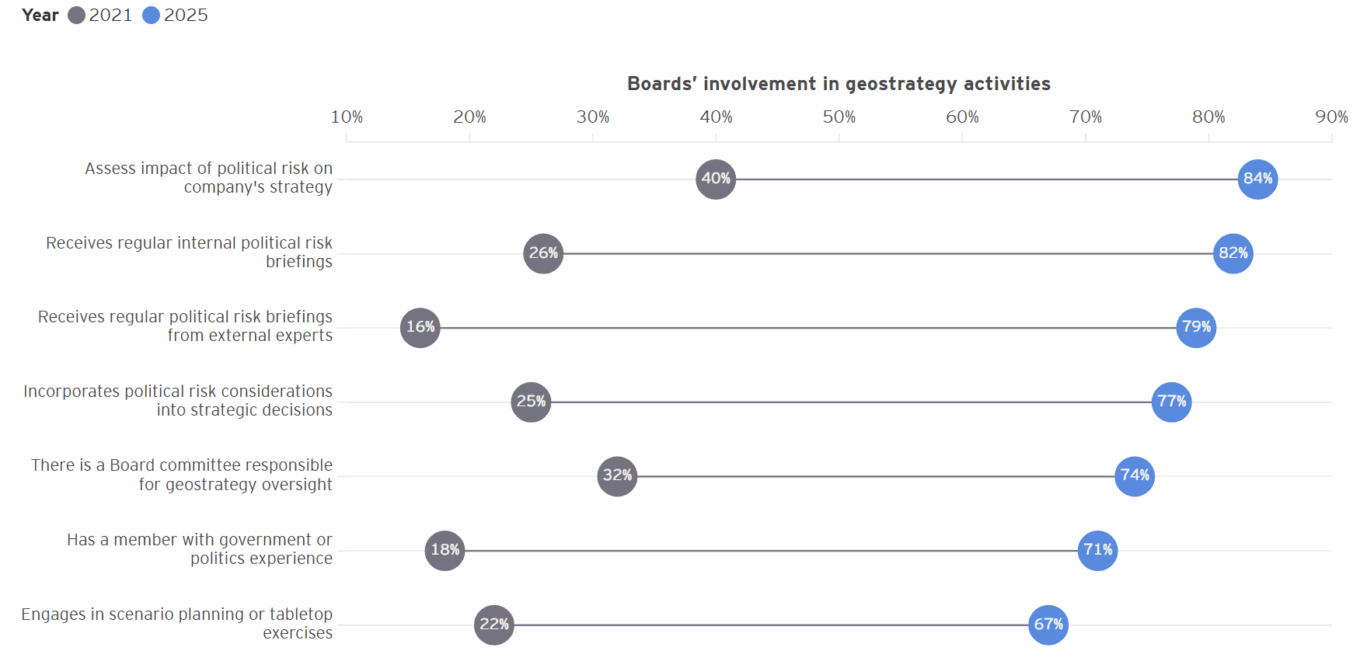
In the EY-Parthenon Geostrategy in Practice 2025 survey, 74% of global executives said political risks have affected their company’s supply chains in the past 24 months. For the majority (63%), the impact was negative. An EY-Parthenon survey regarding the frequency of executives being surprised by political risk events or their impacts compared 2021 to 2025 results and showed the share of political risk events that were unexpected has increased significantly. The losses resulting from geopolitical disruption have been so substantial that corporate boards are awakening to the need to get in front of such volatility. According to EY Parthenon research, boards in 2025 were more than twice as likely to be involved in geostrategy discussions than they were in 2021.
TABLE 2: Boards have awakened to geostrategy
Source: EY-Parthenon.
COVID-19
The rapid onset, unexpected nature, and severe consequences of the COVID-19 pandemic exposed the brittleness of modern supply chains to a degree that recent prior shocks had not. National lockdowns forced some companies to close or operate below capacity due to labor shortages, slowing or halting flows of raw materials and finished goods. Counterparties had few, if any, contingency measures available to address their inability to procure or deliver through established pathways. These vulnerabilities rippled through global supply chains. A 2020 Ernst & Young survey asked companies whether they were fully prepared for the pandemic: Only 2% of respondents said yes. Fifty-seven percent said they experienced serious disruptions and 72% reported negative effects.
Tariffs
More recently, the Trump administration’s rapid and often unpredictable tariff changes have similarly exposed the flaw in rigid supply chains. Among the consequences of these actions were announcements of massive private-sector investments in building U.S.-based production facilities to shift supply chain footprints away from overseas locations. Major pharmaceutical companies have committed to at least $50 billion of investments in U.S.-based production facilities. Technology giants like Nvidia and Apple each committed to over $500 billion in manufacturing investments across the United States. In total, nations and large corporations around the world have committed to invest trillions of dollars in U.S. facilities. In the near term, however, companies globally face higher costs and supply uncertainty.
Managers have minimized supply chain disruption by avoiding change…
Supply chains are as sensitive to internal changes as they are to external shocks like COVID-19 and tariff volatility. A break at any one point in a supply chain can bring business to a halt across an organization and across multiple companies, resulting in significant costs and lost revenue. As a result, the supply chain industry is notoriously risk averse, making it slow to innovate and highly resistant to change. The sector is often still encumbered with legacy, on-premise data management systems. Despite the rigidity and related shortcomings of these systems, supply chain stakeholders cling to them because these familiar systems have proved reliable under normal circumstances over years or decades.
… but avoiding change is no longer an option
Today, two primary factors are forcing supply chain stakeholders to embrace technology innovation. First, the recent experiences with COVID-19 and geopolitical instability have highlighted how brittle today’s supply chains are and how even small supply chain perturbations can lead to enormous costs. Second, rigid supply chains have become a key barrier to industries realizing the full benefit of recent and ongoing investments in cloud-based software, automation technology and, increasingly, artificial intelligence.
Deloitte’s 2025 Smart Manufacturing Survey, conducted from August to September 2024, polled executives from large manufacturing companies headquartered or with operations in the United States regarding their views on smart manufacturing (defined as capturing and integrating facility data for automation and analysis that improves manufacturing and operational performance). Ninety-two percent of manufacturers surveyed said they believe smart manufacturing will be the main driver for competitiveness over the next three years, a six-percentage-point increase from a survey Deloitte conducted in 2019. Similarly, 93% of respondents believed their smart manufacturing initiatives would transform how products are made, a 10-percentage-point increase from the 2019 survey.
Seventy-five percent of respondents in this Deloitte survey stated they expected to increase their budget for smart manufacturing investments, and 78% of respondents planned to allocate at least 20% of their budgets for smart manufacturing initiatives. Respondents reported their smart manufacturing initiatives led, on average, to a 10% to 20% improvement in production output, a 7% to 20% improvement in employee productivity, and 10% to 15% in unlocked capacity. When asked where they planned to prioritize investing in the next 24 months, 41% of respondents said they would prioritize factory automation hardware, and 40% said they would prioritize data analytics. Almost half of respondents (46%) said process automation was their first or second priority for investment over the next two years.
But unless supply chains become more flexible and resilient, it will be challenging for manufacturers to realize the full potential of smart manufacturing. Supply chains must be integrated with factory automation, data analytics and related smart manufacturing initiatives.
The path to resilience and flexibility
Cloud adoption in supply chains
Moving from on-premise to cloud software is a key way supply chains can increase their resilience and flexibility. Over the past decade, cloud adoption in the supply chain sector has accelerated. For example, as recently as 2015, cloud deployments represented a minority of new warehouse management and supply chain software implementations, but by 2025, a majority of such implementations were cloud-based. This shift, initially driven by rising e-commerce demands and improvements in technology, accelerated starting in 2020 as the COVID-19 pandemic and resulting supply chain shocks highlighted the need for greater supply chain visibility, scalability, cost efficiency and real-time data and analytics for more agile decision-making.
Blue Yonder and Manhattan Associates, two of the largest providers of supply chain management software, are strong promoters of the move to cloud technology for supply chains. Blue Yonder offers its “Journey to Cloud” program, and in May 2025, the company announced a global multi-year agreement with leading third-party logistics provider GXO Logistics to deploy Blue Yonder’s end-to-end cloud solution aimed at improving speed, flexibility and predictability for GXO customers. This platform is intended to be flexible and agile with a shift away from customization and toward configurability. By moving away from legacy on-premise systems to cloud systems, Blue Yonder’s customers gain access to regularly updated modern cloud infrastructure with embedded predictive and agentic AI to help customers operate more efficiently and respond more rapidly to changes in the operating environment.
Similarly, Manhattan Associates began transitioning its flagship warehouse management solution to the cloud in 2020 and has seen strong adoption of its cloud platform, Manhattan Active Platform. The company expects adoption to accelerate in the next year or two as customers increasingly appreciate the functional and operational advantages of migrating to the cloud. Additionally, in mid-2025, Manhattan Associates introduced a fixed-price, fixed-timeline cloud conversion offer to provide customers confidence their conversion will not be disruptive.
Diversification
Supply chain stakeholders can reduce supply chain risk and increase speed and resilience by adopting multi-dimensional, segmented networks that make it easier to switch and diversify supply chain connections and nodes across geographies, transport modes, operating facilities and suppliers.
Geographic diversification: By sourcing inputs from multiple geographies and routing outputs via multiple geographic paths, companies can minimize the impact of location-specific events, such as the recent closure of the Strait of Hormuz, on their supply chains. Companies can diversify geography in their supply chains at all levels, from the global regional and country level to the intra-urban level. The choice of how best to diversify geographically is often connected to strategic business considerations. For example, consumer-focused businesses that produce low-cost items for end customers might benefit from locating production capacity in multiple facilities, each close to key end markets. In addition to diversifying production capacity across multiple geographies, this could dramatically reduce the unit cost of shipping. Further, such companies’ broader physical presence could add to brand awareness, boosting demand. On the other hand, the direct and indirect costs of diversifying geographies may outweigh the risks of remaining concentrated.
Transport diversification: Having the option to transport goods via multiple transport modes (road, air, rail, water) and via multiple carriers for a given transport mode minimizes risk that a disruption of any one mode prevents shipping. For example, the American Transportation Research Institute reported the trucking industry lost $108.8 billion in 2022 due to traffic congestion. For companies dependent on road transport, it may make sense to reduce their exposure to this cost by incorporating air, rail or water options into their transport networks, assuming the cost of doing so doesn’t exceed the expected cost of road transport disruptions.
Operational diversification: Diversifying supply chains across multiple operating facilities is another way to increase supply chain flexibility and resilience. For example, distributors can distribute from a dispersed network of warehouses to protect against local warehouse disruptions. Companies can also use technology to increase resilience and flexibility within operating facilities. For example, a warehouse can use robotics to automate routine tasks, freeing employees to focus on higher-level operating decisions.
Supplier diversification: Supplier diversification reduces supply chain risk resulting from disruptions at any one supplier or subsets of suppliers.
Barriers to diversification
Companies’ options for diversifying their supply chains may be limited by factors related to regulation. For example, healthcare and life science manufacturers often must ensure their suppliers are qualified by the FDA and use formal good manufacturing practices. Drug companies frequently need to ensure they can minutely trace the origin of their products through their entire supply chain, in part to be able to support potential product recalls. FDA drug approvals often effectively lock producers into always using the same supplier that was used in the approval process.
Similarly, aerospace and defense companies must comply with International Traffic in Arms Regulations and Export Administration Regulations—U.S. government frameworks to protect national security and regulate the transfer of sensitive technologies to foreign nationals or countries. These companies also face country-of-origin restrictions and Defense Federal Acquisition Regulation Supplement cybersecurity standards, which are mandated by the Department of Defense to protect controlled unclassified information on their networks.
Food and beverage companies are required to abide by the Food Safety Modernization Act, aimed at preventing food safety hazards across the entire supply chain rather than reacting to contamination after it has already happened. Hazard Analysis Critical Control Point is a management system adopted by the FDA and USDA to identify, evaluate and control biological, chemical and physical hazards to food safety. For example, certain products require temperature control, which entails documentation like temperature monitoring logs, temperature excursion reports, calibration certificates, packaging qualification reports, standard operating procedures and chain of custody forms to ensure compliance throughout the logistics process.
All these factors make supply chain diversification challenging (if not impossible) for companies in regulated industries. But whether regulation or other factors pose challenges to diversification, all companies must determine whether diversification options compromise quality, efficiency or overall profitability. In the following section, we provide an overview of solutions that address these challenges with technology focused on enabling supplier diversification.
Supplier diversification solutions
Supplier diversification solutions include source-to-pay platforms, supplier relationship management software, supplier risk platforms, cold chain platforms, Internet of Things monitoring platforms, digital documentation, compliance automation, enterprise resource planning systems, and governance, risk and compliance platforms. We highlight a few of these.
Source-to-pay platforms act as backbones for procurement processes. These systems manage the entire procurement life cycle, from initial identification of a need to sourcing suppliers, negotiating contracts, ordering goods and services, receiving those goods and services and making final payments. They become the place to manage supplier spend, monitor approval processes, ensure contract compliance and establish audit trails. These platforms generally have digital sourcing capabilities with request-for-proposal and request-for-quote automation, contract life cycle management, purchase order automation, invoice matching (including both two-way and three-way match capabilities) and approval workflows. They provide a visibility layer to track supplier spend against supplier performance, empowering purchasers with the ability to realize cost savings. These platforms help make supplier procurement processes more efficient and more compliant with policies, regulations and contracts, and they help their users maintain better supplier relationships.
Supplier risk platforms focus on external supplier and supply chain disruption risk. Generally, the users of these platforms are procurement and supply chain teams tasked with managing vendors, logistics partners and raw materials. These platforms track suppliers’ financial health, provide bankruptcy and ownership change notifications, and monitor supplier capacity risk. These platforms take into account uncontrollable operational risks, such as natural disasters, port congestion, factory shutdowns and political and regulatory shifts. They are usually equipped with tools to manage geographic concentration, sub-tier supplier mapping and raw materials sourcing risk. They leverage performance metrics such as on-time delivery, quality performance and service level agreement violations as a way to assess and rank suppliers.
Cold chain platforms typically combine hardware and software to monitor, control, document and optimize temperature-sensitive supply chains in real time. Healthcare, pharmaceutical, food and beverage and chemical industries are primary users. These platforms are often complemented by, or incorporate, systems to manage other conditions, such as location, humidity, shock, vibration and light exposure, with sensors and global positioning trackers that are sometimes incorporated in pallets and containers. A software layer sits on top of the hardware, providing dashboards for monitoring, reporting, compliance management and integrations. These platforms usually work in tandem with enterprise resource planning systems, transportation management systems and warehouse management systems.
Looking ahead
In the following company profiles, we feature six companies providing supply chain diversification solutions that directly or indirectly support supplier diversification. As supply chain stakeholders feel increasing urgency to increase supply chain flexibility and resilience, we expect solutions such as these to see increased demand.
Company profiles

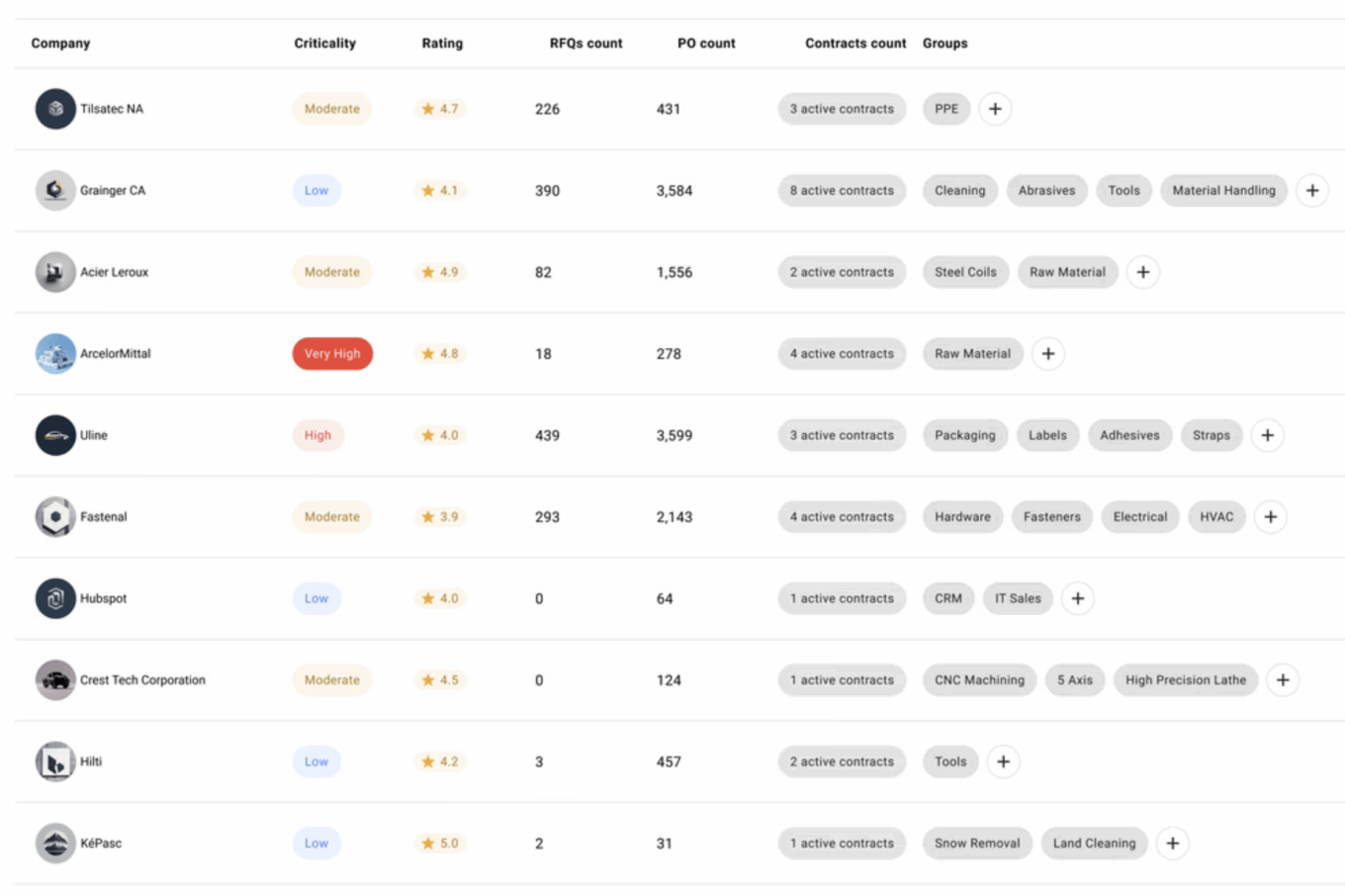
Axya provides a procurement automation platform built specifically for manufacturing organizations. It digitizes requests for quotes, supplier collaboration and purchase-order workflows, replacing email- and spreadsheet-driven processes with structured, auditable workflows. Axya positions itself as a collaboration hub for buyers and suppliers in fast-moving manufacturing environments. The platform’s key capabilities include automated RFQ creation, distribution and comparison, supplier collaboration and messaging, purchase-order management, enterprise resource planning synchronization, spend analytics, supplier performance insights and workflow automation for repetitive sourcing tasks.
Axya diversifies risk by building a two‑sided, segmented manufacturing procurement network that decouples buyers from reliance on single suppliers or regions. This reduces exposure to supplier failure, capacity constraints and industry‑specific demand shocks while maintaining procurement continuity. Axya focuses on mid-market and enterprise manufacturers with complex sourcing cycles and fragmented supplier communication. The platform is built for manufacturing with manufacturing-specific workflow design, strong supplier collaboration tools, rapid deployment with minimal IT overhead and clear return on investment in reducing sourcing cycle times. By focusing on manufacturing, the company distinguishes itself from other source-to-pay platforms, giving it a clear niche.
Axya connects with existing enterprise resource planning systems to improve supplier collaboration
Source: Axya.

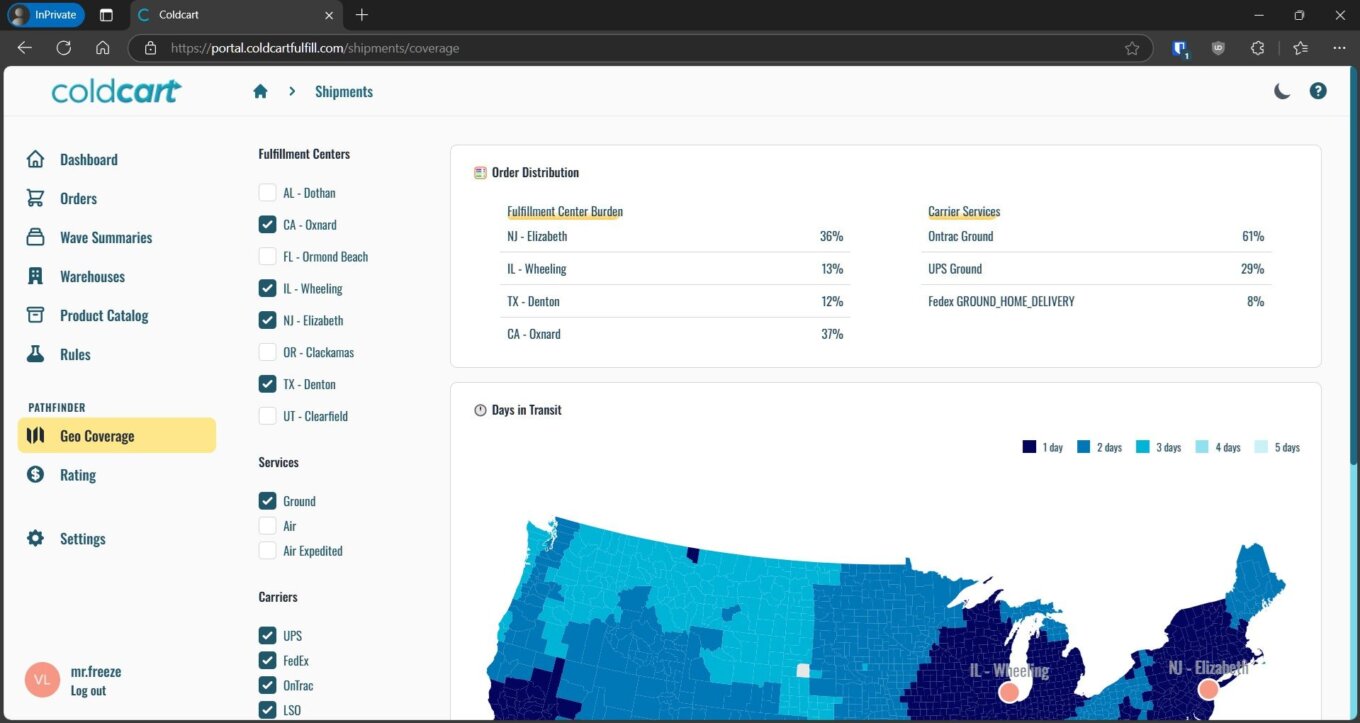
Coldcart provides an orchestration platform for frozen and refrigerated parcel logistics. It acts as a system of record for cold-chain fulfillment, optimizing packaging, routing and carrier selection to reduce spoilage and cost. The platform’s key capabilities include real-time monitoring of carrier performance and shipment outcomes, automated packaging and pack-out recommendations, routing optimization for cold-chain shipments, analytics for spoilage, cost variance and carrier reliability, and system-of-record for planned versus executed fulfillment.
Coldcart serves food, healthcare and other temperature-sensitive industries and is built for cold-chain parcel logistics. Coldcart reduces risk by orchestrating perishable logistics across multiple dimensions like geography, fulfillment centers, carriers, packaging methods and real‑time environmental conditions. Each shipment is dynamically routed based on weather, cost, performance and availability. This enables volume to shift paths instantly when a carrier, region or fulfillment node becomes unreliable, and it minimizes spoilage, refunds and single‑provider dependency in high‑variance cold‑chain networks.
Coldcart portal brings together all operations and data
Source: Coldcart.

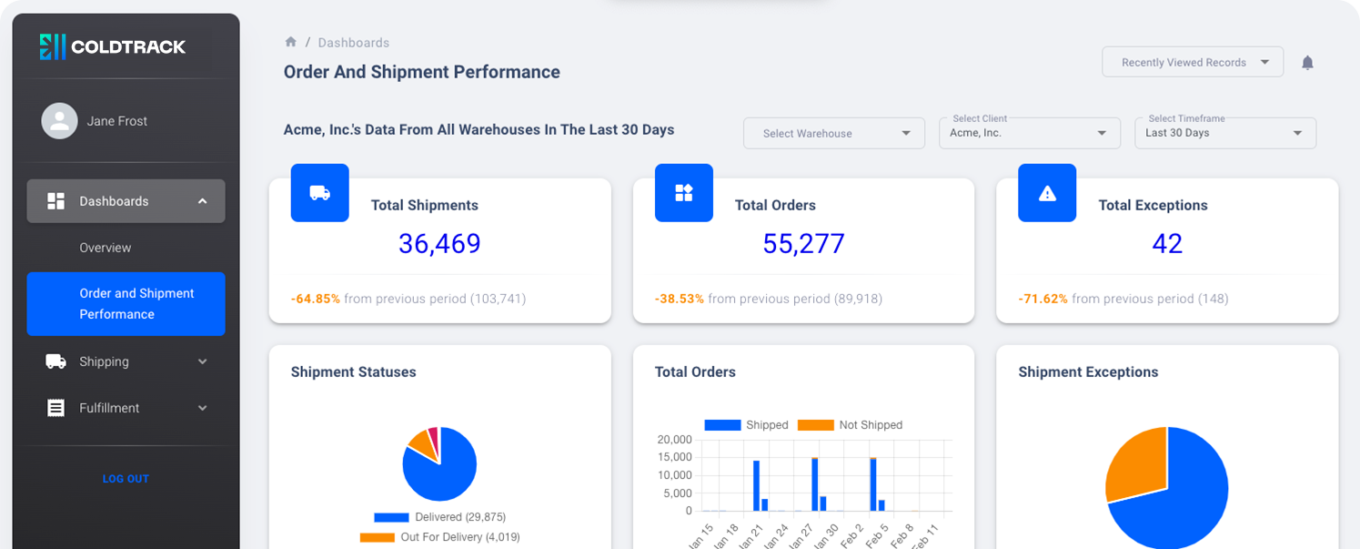
ColdTrack is a tech‑enabled cold chain fulfillment platform built for perishable business-to-consumer and business-to-business e-commerce. The company combines temperature‑controlled warehousing, precision pick‑and‑pack, and cold and frozen last‑mile distribution with proprietary software that optimizes routing, packaging and time‑in‑transit for sensitive goods. With a nationwide cold‑storage network and the ability to reach over 99% of the U.S. population within 48 hours or less via ground shipping, ColdTrack helps food, beverage, pet food and nutraceutical brands scale direct-to-consumer sales while reducing spoilage, protecting quality and maintaining compliance across the cold chain.
ColdTrack reduces risk by distributing fulfillment across multiple cold-chain nodes and partners, diversifying carrier options and standardizing high-variance cold-chain decisions like routing, pack-out and traceability via software, while segregating operations by temperature regime and flow type to contain failures and protect service levels. ColdTrack differentiates from traditional and technology-focused cold chain providers by operating at the intersection of execution, software and network design, rather than competing on storage capacity or monitoring alone.
ColdTrack order and shipment performance dashboard
Source: ColdTrack.

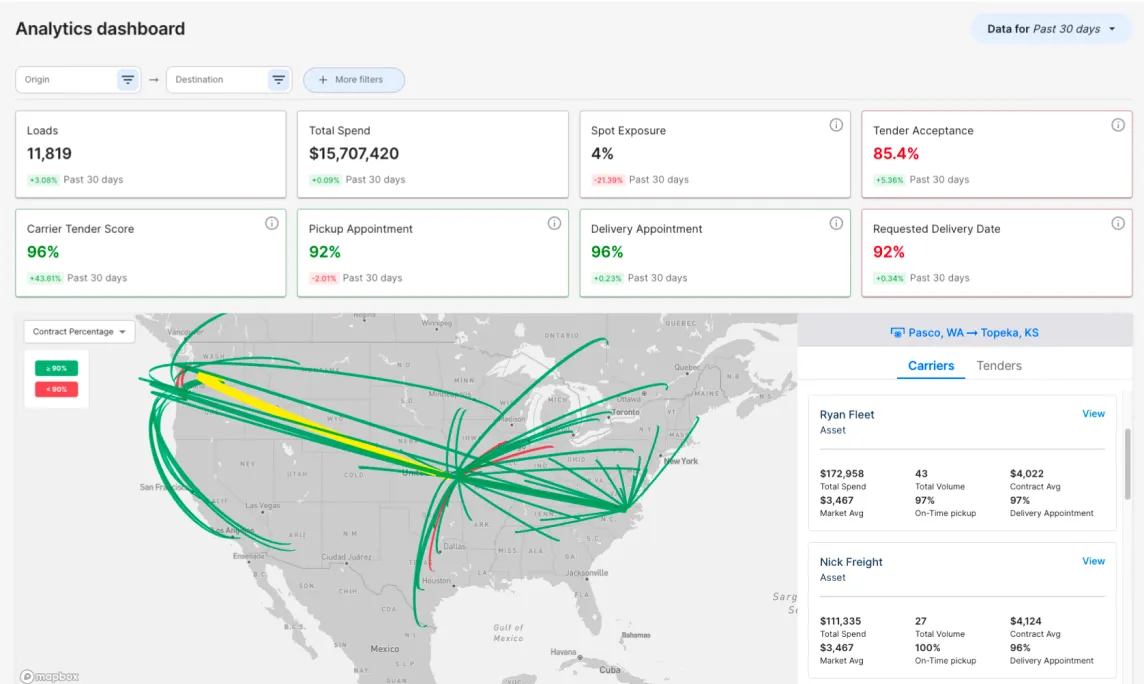
GoodShip is a freight orchestration and procurement platform that helps large shippers buy transportation and manage carrier networks more intelligently. By analyzing performance and pricing at the lane and carrier level and benchmarking against market data, it enables shippers to shift volume dynamically, reduce freight spend volatility and avoid overreliance on any single carrier or contract structure. The company’s key capabilities include AI-powered transportation procurement, real-time analytics on lane performance, automated recommendations for underperforming lanes, routing-guide management, and collaboration tools for shippers and carriers.
GoodShip mitigates freight risk by segmenting transportation networks at the lane, carrier and data‑source levels while using AI to continuously rebalance procurement and execution decisions. Lane‑level benchmarking, multicarrier scorecards, embedded market data and self‑service portals reduce dependence on any one carrier, contract or pricing signal, enabling shippers to absorb rate volatility, service failures and capacity shortages without destabilizing the broader network. GoodShip differentiates by being a unified platform, typically displacing a spreadsheet.
Analytics and recommendations dashboard
Source: GoodShip.

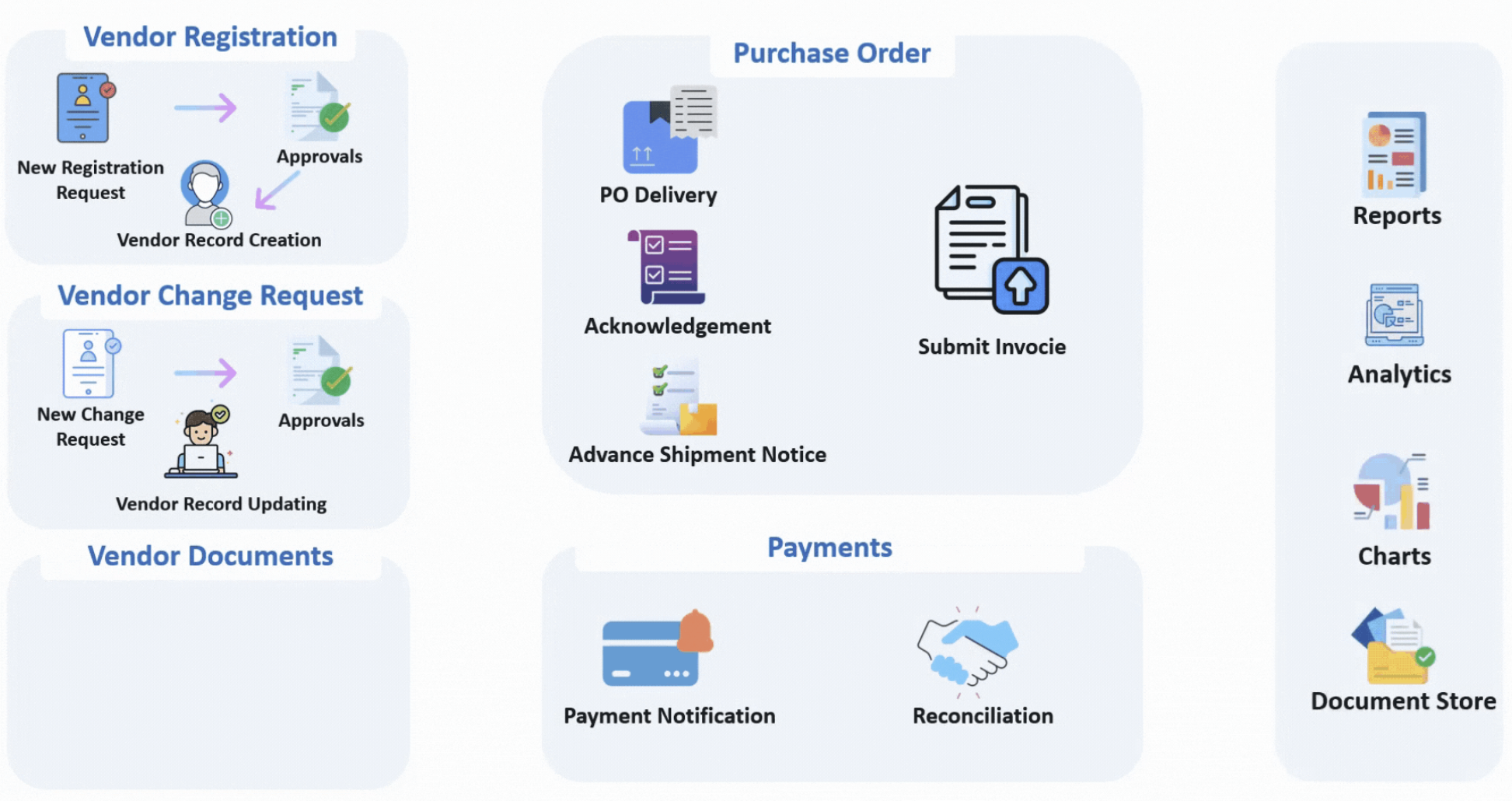
SmartDocs delivers an AI‑enhanced source‑to‑pay platform with deep SAP integration. The platform unifies sourcing, contracting, procurement and supplier collaboration while embedding AI to automate tactical tasks and improve decision‑making. SmartDocs positions itself as a strategic orchestration layer that augments existing enterprise resource planning investments. The platform’s key capabilities include AI‑powered source-to-pay automation and analytics, supplier portals, contract life cycle management, operational procurement, automated approvals, document extraction, compliance workflows, spend intelligence and performance dashboards.
SmartDocs mitigates risk through modular segmentation across the source‑to‑pay life cycle and by embedding these modules into multiple deployment and collaboration environments. This reduces operational and adoption risk, ensuring that disruptions in one process, interface or IT environment do not stall the entire procurement or compliance workflow. SmartDocs targets SAP users seeking to modernize procurement without changing platforms. Its AI‑driven orchestration appeals to organizations looking to unify tactical and strategic procurement. The company differentiates with its native SAP and Microsoft Teams integrations, AI‑driven orchestration across the source-to-pay life cycle, and focus on harmonizing tactical and strategic procurement. Its AI capabilities and SAP alignment position it well for enterprises seeking modernization without disruptive ERP changes.
Vendor management key features
Source: SmartDocs.

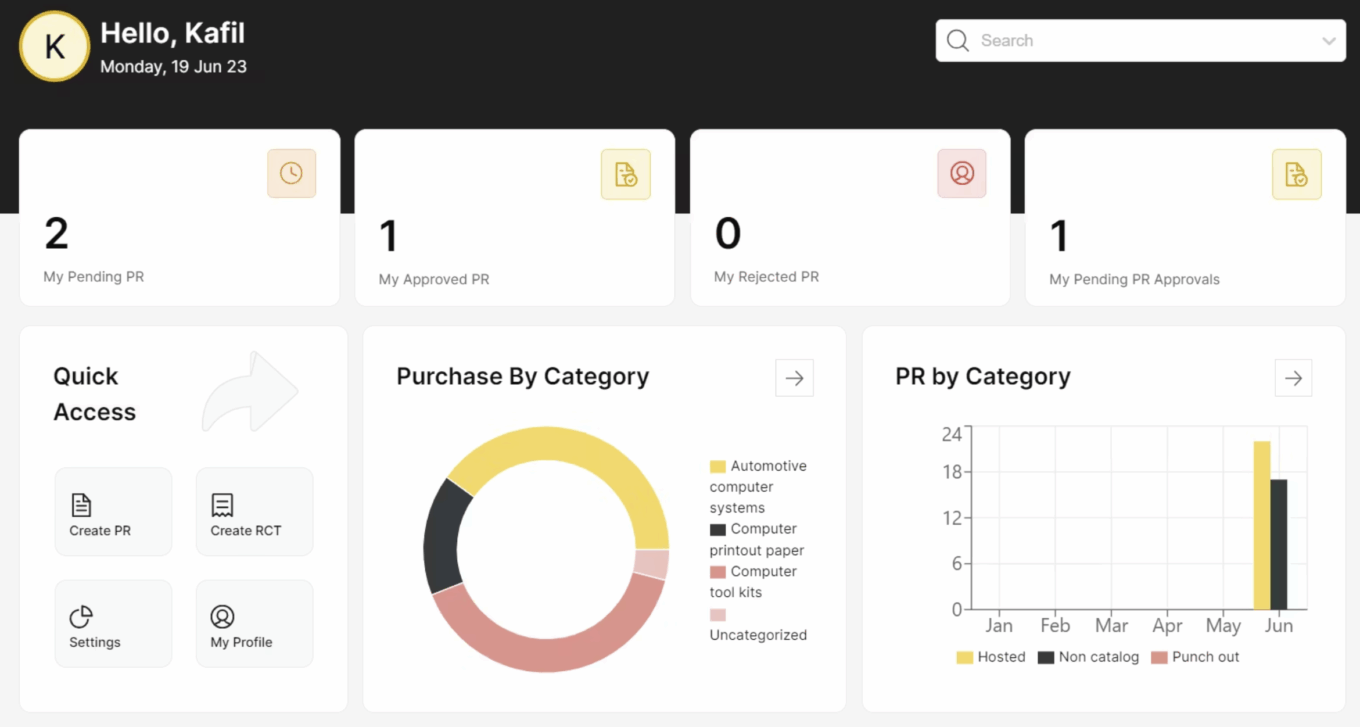
Zapro is an AI‑native procurement and vendor management platform that centralizes how companies onboard suppliers, manage spend, automate payments and monitor vendor risk. By segmenting and automating each stage of the vendor life cycle, from onboarding to invoicing, it reduces operational, financial and compliance risk while enabling organizations to scale procurement without proportional increases in complexity. Zapro’s key capabilities include end-to-end procurement automation, inventory management, accounts payable automation, contract management, spend analytics and AI-driven sourcing and bid evaluation.
Zapro diversifies procurement and financial risk by segmenting vendor life cycles into independently governed modules connected by integrations rather than manual handoffs. This layered approach allows organizations to 1) contain supplier, compliance or payment issues within specific stages, 2) swap vendors quickly and 3) maintain spend and risk controls even when individual suppliers or processes become unstable. Zapro differentiates with its unified purchase-to-pay, inventory, and order-to-cash functions in a single platform.
Zapro vendor management dashboard
Source: Zapro.
Request full report
To access the full report, please provide your contact information in the form below. Thank you for your interest in First Analysis research.