
Quarterly insights: Internet of Things
Expanding opportunity in electrical submetering

We believe the market for electrical submetering is about to see increased attention and growth for two main reasons.
First, recent years’ accelerating electrification of the worldwide economy and the advent of energy-hungry AI applications have created an imbalance in the supply and demand equation for electricity. As a result, the value of using submetering to optimize electrical efficiency has surged.
Second, AI now enables more effective use of submetering data, creating new opportunities to prolong equipment life, enable predictive maintenance and promote more efficient electrical usage. This further compounds the value of submetering.
We believe this expanding opportunity is large, and many companies that combine innovative, differentiated features with channel-friendly go-to-market initiatives will thrive as the market develops.
We profile a representative spectrum of market participants.
TABLE OF CONTENTS
- Electric metering and submetering
- Why now?
- Submetering choice depends on use case, transient load considerations key
- Key submetering solution characteristics
- Market not very penetrated
- Consultants, electrical contractors key to market, especially for newer entrants
- To data center or not to data center
- A compelling emerging opportunity
- Key participants in the electrical submetering market
- IoT index nearly flat from a year ago
- IoT M&A: Notable transactions include Link Labs and 75F
- IoT private placements: Notable investments include Ranchbot and Terminal
Electric metering and submetering
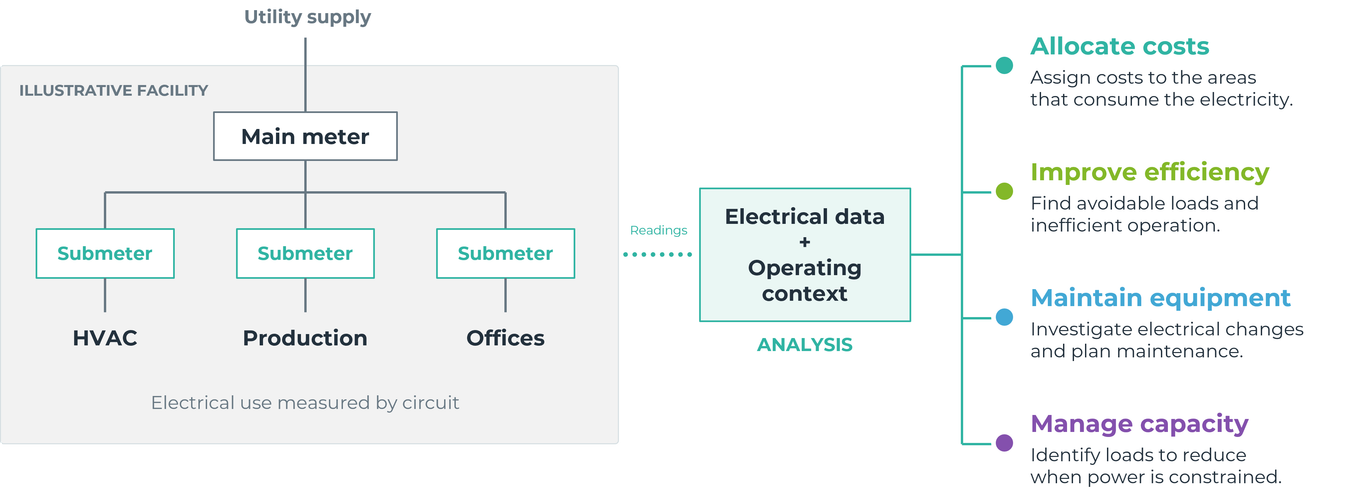
Electric utilities provide meters at the points utilities connect to customers’ locations. The meter measures volts (which can be thought of as pressure) and amps (can be thought of as rate of flow) at the location and uses these to calculate usage in kilowatt-hours (kWh) to bill customers. More sophisticated meters can measure other attributes, such as usage in intervals (for example, how much was used each hour or minute), peak usage over a given time, and power being transferred back to the utility (for example, from customers’ solar panels).
Electrical submetering is the use of additional meters after electricity flows through the main, utility-supplied meter. Submetering has been around for more than a century, but the practice gained popularity in the 1970s during the energy crisis. The use case at that time was to enable landlords to charge multi-unit housing residents directly for the energy their specific units consumed. So, for example, a 100-unit apartment building could have 100 submeters and then bill each unit for the amount of electricity it used rather than apportioning the total bill for the building based on non-usage factors such as square footage.
Submetering for cost allocation, whether for a multi-unit dwelling or for allocating costs to specific buildings on a campus or departments within a single factory for cost accounting purposes, remains a major use case. However, over the years, the technology has gotten better and cheaper, and use cases have expanded dramatically. Sophisticated analysis can find ways to improve efficiency and enable preventive maintenance by detecting poorly performing equipment and identifying electrical anomalies that signal impending equipment failure. With advances in machine learning and AI, electrical data can be combined with other data to find novel solutions to a variety of efficiency and productivity issues for users ranging from landlords to AI data center engineers (see Table 1).
TABLE 1: Submetering supports cost allocation, efficiency and maintenance across residential, commercial and industrial settings
Source: First Analysis.
Why now?
We believe the market for electrical submetering is about to see increased attention and growth for two main reasons.
First, there is immense, well-documented pressure on electric grids to keep up with accelerating demand. Against the multi-year backdrop of increasing electrical demand due to the growth of electric vehicles, and to a lesser extent the energy demands of crypto and blockchain applications, came the explosive growth of AI data centers. Data centers, including AI and hyperscaler facilities, are expected to account for 6.7% to 12% of electricity consumption in the U.S. by 2028. And this is not just a U.S. phenomenon. Grids around the world are being pressured by these same forces. As a result, the value of using submetering to optimize electrical efficiency has suddenly surged.
Second, the fact that AI now enables more effective use of submetering data compounds this value. Combining AI with submetering data creates new opportunities to prolong equipment life, enable predictive maintenance and promote overall more efficient electricity usage. Municipalities and utilities may offer substantial incentives to companies that can ramp down electrical demand when asked. Understanding how electricity is used within organizations and how ramping up and down the machinery carrying the largest electrical draws will impact operations is key to being able to thrive in a new era of electricity scarcity. Organizations that invest now to gain sophisticated insights and understanding of their electrical needs and how they can be managed most effectively may have a competitive advantage in the future.
Submetering choice depends on use case, transient load considerations key
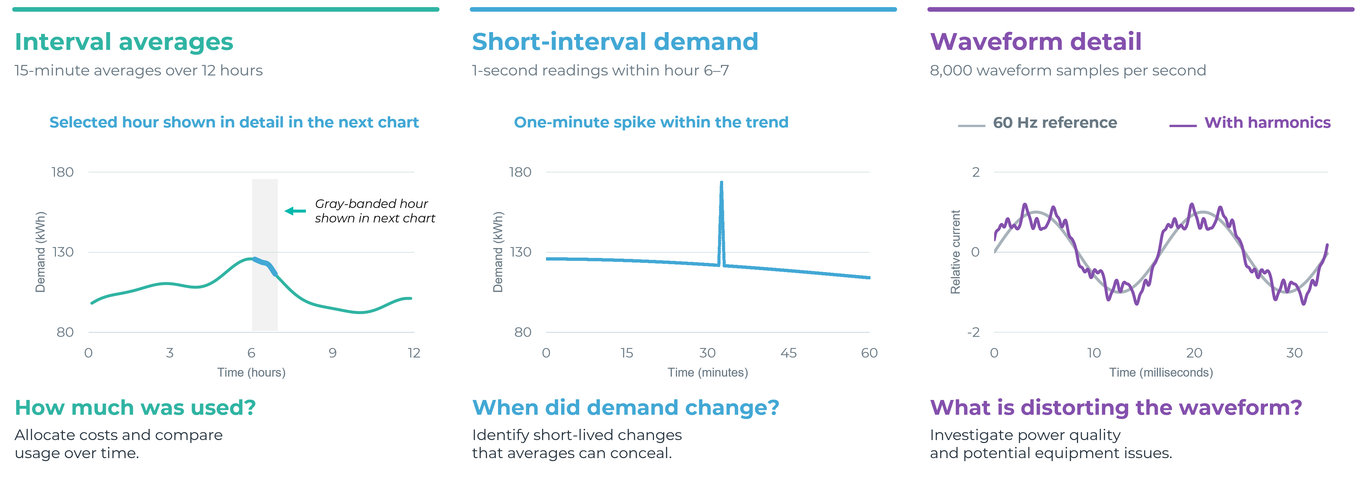
The choice of submetering equipment varies widely by use case, such as whether transient loads are a significant consideration. Transient loads in electrical terms are rapid changes in electricity use. Examples of situations where transient loads are an important factor to consider include air-conditioning chillers. Typical meters sample at sub-second intervals but aggregate the data and report energy usage every 15 minutes. The impact of the rapid changes in electrical use in these situations cannot be understood with typical meters that don’t measure transient loads. Depending on the type of equipment consuming electricity, reporting rates may need to be in seconds or, in the case of digital assets such as massive racks of graphics processing units found in data centers, thousands of times per second. Sampling usage at these very high frequencies enables metering devices to measure harmonics, which can be used to detect very granular levels of equipment performance changes. The higher the sampling rate, the more harmonics can be measured. For this reason, meters used to analyze performance of complex electrical machinery (including computer banks and solar inverters) generally sample at rates of 8,000 hertz or more (see Table 2). (Hertz is the sampling rate per second.)
TABLE 2: Detailed electrical measurements reveal demand spikes and waveform distortion hidden by interval averages
Source: First Analysis.
Notes: Illustrative data. Hours 6-7 of the first chart are expanded in the second. The waveform is a separate example.
Key submetering solution characteristics
Having been around for decades with myriad use cases, submetering solutions come in many variations optimized for specific markets. A simple delineation is residential versus commercial applications: Commercial meters can handle higher power loads and are designed to analyze the three-phase power used in commercial applications, whereas residential meters are designed to work with the single-phase power supplied to homes. We summarize some of the key characteristics that determine which markets submetering solutions are best suited for:
Ease of installation: Equipment that simply clamps onto live wires, with no need to turn off power during installation, and reports wirelessly using battery power is considered the easiest to install. Some of these solutions also include remote troubleshooting and configuration. By contrast, installing solutions that are hardwired into electrical circuit panel boards requires advance scheduling, downtime for turning off power, and trained electricians, adding significant cost and disruption. However, hardwired solutions generally can produce greater fidelity than clamp-on solutions and so are better suited for certain applications, particularly for transient load analysis that requires high sampling rates.
Sampling and reporting rate: Use cases that require more granular data will require shorter reporting increments, and the more data that is reported, the more energy and bandwidth are required to transmit the data. Thus, battery-supported wireless solutions, though easy to install, are not appropriate for short reporting increments or large data file transfers. Sampling and reporting needs can also vary independently of each other. Metering sampling intervals are usually much shorter than reporting intervals. For example, a typical home meter reports every 15 minutes but is actually sampling at 1,000 to 3,000 hertz. This means a home meter could theoretically be used to report sub-second data. However, as noted above, much of the modern industrial and digital infrastructure requires sampling rates of 8,000 hertz or more to achieve maximum benefits in analysis, so meters for this purpose not only need the ability to report granular data but also need different equipment for sampling.
Interoperability: As noted, some use cases involve correlating electrical usage with other inputs to gain insights. In these cases, submetering data must be exportable so other software, usually from another vendor, can use it. This interoperability is a function of physical connection choice, data format, data communication protocols and possibly application programming interfaces that make easy integration possible.
Physical footprint: Submetering takes up scarce space within electric panels. Finding sufficient space is particularly challenging when retrofitting existing infrastructure that didn’t contemplate accommodating submetering equipment in the future. Further, all installations must conform to safety codes, and meters can produce heat so cooling and airflow have to be considered. Split-core “clamp-on” solutions can help with retrofitting due to their relatively small size, but they have limitations. Some solutions can monitor multiple systems supplied by a single circuit by learning to identify the electronic signature of each device connected to the circuit, thus requiring fewer meters to monitor all the devices. There are too many configurations and options to cover in this report, but suffice it to say that finding the right footprint for a specific installation is a key step. Submetering providers that have a variety of options and can monitor many circuits with a small additional footprint have a competitive advantage in this context.
Cost: Upfront costs are typically $300 to $1,500 per meter point, with equipment accounting for 30% to 70% and the balance for installation. So both hardware costs and installation costs can be important considerations. In addition, there may be software integration costs to make submetering data work with other systems. Post-installation costs for ongoing maintenance, data transmission and data storage can vary widely, but 10% annually of the upfront cost is a good rule of thumb for most commercial installations. Part of any submetering project is determining appropriate scope. Rarely is every circuit worth metering, so determining which circuits provide adequate return on investment is important. The expansion of use cases for submetering to encompass monitoring for faulty equipment, capacity planning and understanding how to ramp down operations if electricity is scarce or temporarily expensive may cause the amount of submetering that generates compelling return to expand dramatically. This is part of our bullish thesis.
Other considerations: Many other characteristics of submetering solutions can determine suitability for specific applications and markets. Examples include data security features for utility customers and export restriction compliance and certification for customers with integrated, global facilities footprints.
Market not very penetrated
If all this sounds complicated and expensive – it is! And we feel this is why the penetration rate of submetering is low. Penetration in multi-unit residential housing varies greatly by city and state due to regulations around whether and how it can be used to bill tenants. Geographies such as New York City and California require submetering in some new construction and permit it in older buildings with strict oversight of the meter technology used. In commercial and industrial applications, data suggest larger and more sophisticated operations are more likely to use submetering. Data indicate more than 50% penetration among larger industrial settings. However, this indicates only some of the circuits at those facilities are monitored, and there is likely substantial opportunity to monitor other circuits within this penetrated base.
Consultants, electrical contractors key to market, especially for newer entrants
Submetering is complex, and most facility managers, even at heavy industrial sites, don’t maintain staffs of electrical experts to design and implement solutions. Instead, they usually engage electrical contractors and consultants. And since there are hundreds of submetering suppliers, these third parties usually strongly influence or actually determine their clients’ submetering choices. Further, both clients and consultants lean toward the easy choice: equipment they’re comfortable with and know is reliable from prior experience. We feel this gives established brands and incumbents an advantage as the market grows. Well-known industrial brands such as Schneider Electric, ABB and Siemens have full lines of proven, flexible solutions.
How can smaller and newer submetering providers compete? Many smaller companies emphasize advantages such as lower cost, easier installation, easy integration with competing and adjacent solutions, partnerships with related value-added solutions, and better security. However, we think the key to making headway against the large incumbents will be winning over the influencers: the consultants and electrical contractors that most facility managers rely on when designing and implementing projects. Unless consultants and electrical contractors are sold on smaller providers’ solutions, these influencers will often doom the best direct sales pitch with a few words: “I’ve never heard of them” or “I’m not comfortable installing new equipment” or even “It sounds great, but it’s yours to fix if something goes wrong.” Submetering providers that invest in building influencers’ confidence in the value of their solutions will create the best path to market.
To data center or not to data center
Data centers are driving substantial submetering demand due to the huge amounts of capital being invested in them, the fact that electricity is among the greatest cost components in running a data center, and the public scrutiny of data centers’ impact on the environment and consumers. As a result, almost every submetering company with products suitable for data centers is pursuing this market, and many others have pivoted to address it.
For the established, large players, the data center market represents a high-growth opportunity in what for much of their histories has been a lower-growth market. Smaller companies face the opportunity to provide specialized technology optimized for data centers. We highlight Verdigris Technology, which we profile in the next section, as an example of a company whose core differentiation may be particularly well suited for data centers. But small companies also face unique challenges in addressing the data center market. First, given electricity is such a critical input for data centers, data center developers are likely to make demands that will strain the resources of small companies. Second, we believe these buyers’ large scale, combined with the crowding of vendors seeking to serve them, will give the buyers power to extract more cost concessions from vendors relative to more generic buyers.
We believe a more lucrative approach for smaller companies will be to target channels delivering solutions to non-data center customers that need unique submetering capabilities. This market is less competitive, and this channel may appreciate the attention if they are being ignored by those focusing on data center opportunities.
A compelling emerging opportunity
Market forces are conspiring to put a spotlight on electricity consumption. Submetering provides answers to the questions an increasing number of enterprises will be asking about electricity usage and how they can optimize it. We believe the emerging opportunity will be large, and many companies that combine innovative, differentiated features with channel-friendly go-to-market initiatives will thrive as the market develops.
Key participants in the electrical submetering market
Below we provide profiles of a small sample of the hundreds of competitors in this market. Our profiles include the largest electrical equipment suppliers (ABB, Eaton, Schneider Electric and Siemens) where submetering is just a small part of their overall portfolios, as well as smaller, specialized suppliers each focused on a single portion of the market. Submeter buyers often choose the largests suppliers’ submetering solutions because submeters are just one part of a large purchase order that includes other products or service elements that are driving the purchase decision. Thus, large suppliers, while having excellent submetering solutions, usually won’t lead sales efforts with their submeters or even particularly focus on them. In contrast, the submetering specialists need to stand out and convince prospects why they should make a submetering choice separately from the other electrical componentry. This go-to-market difference is reflected in the profiles below, which emphasize distinct product differentiation for the smaller companies and emphasize distribution and broad market presence for the larger companies.

ABB is a publicly traded Swiss electrification and automation company that generated $33.2 billion in 2025 revenue and has around 110,000 employees. Its electrification business generated $17.4 billion of revenue and employed 53,400 people in 2025, serving buildings, utilities and renewable energy markets, data centers, the transportation industry and other industrial markets. Roughly half of its electrification revenue comes through distributors, with the balance from direct customers including original equipment manufacturers, system integrators, utilities and panel builders.
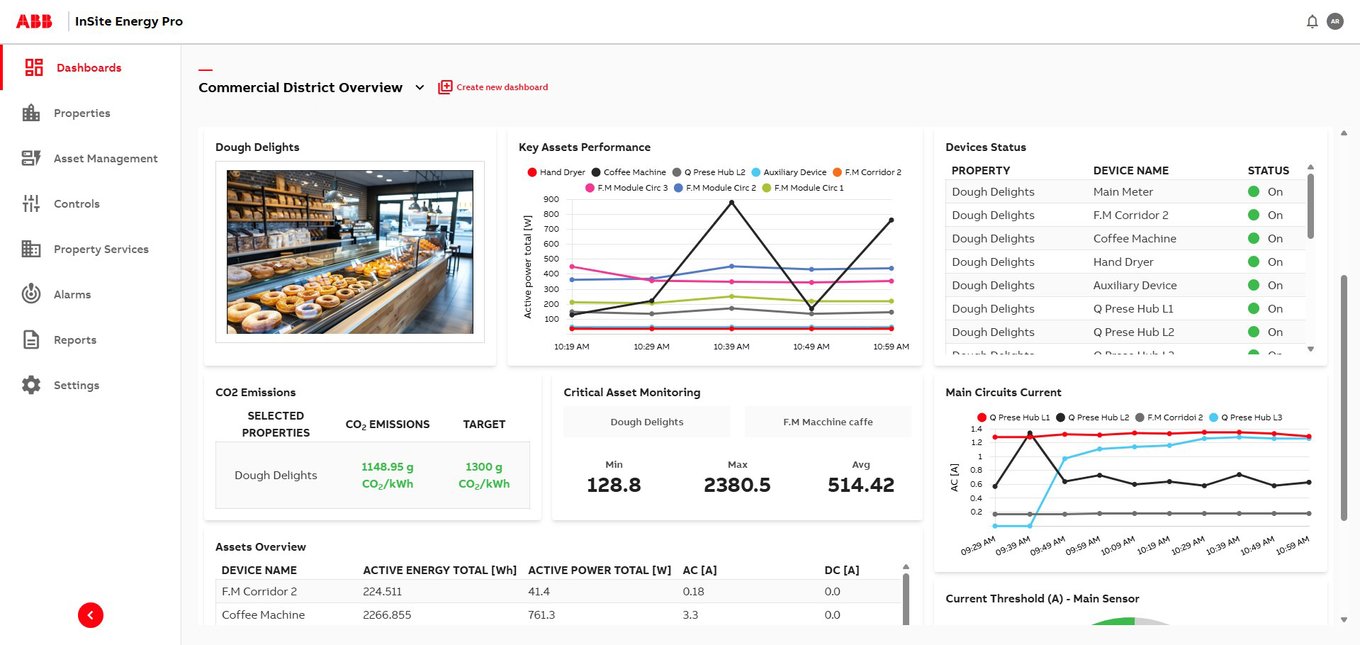
InSite Energy Pro combines meter and circuit-level data to provide real-time energy monitoring across electrical systems
Source: ABB.
ABB’s submetering portfolio spans basic energy meters, higher-end power analyzers and a circuit monitoring system that can connect up to 96 small sensors to track individual electrical lines inside a panel. Its InSite system combines data from these sensors and meters for local or remote energy monitoring, while its BuildingPro offering extends monitoring and control across broader building systems. ABB’s products also support standard communication protocols and third-party systems.
While some competitors compete on price or offer simpler installation or analytics built for specific use cases, ABB’s main advantage is the breadth of its electrical portfolio and channel network. It can sell metering alongside switchgear, circuit breakers and building automation, and its branch-monitoring products can be added to new or existing electrical panels. Its range covers basic energy measurement, circuit-level monitoring and advanced power-quality analysis within one platform. Also, ABB’s openness to third-party devices enables its monitoring products to work in mixed-vendor environments.

CircuitMeter is a small, privately held energy monitoring company founded in 2009 and headquartered in Toronto. The company serves commercial real estate, industrial, municipal and institutional customers, with applications also extending to data centers. It markets its solutions to end users directly and through a network of channel partners.
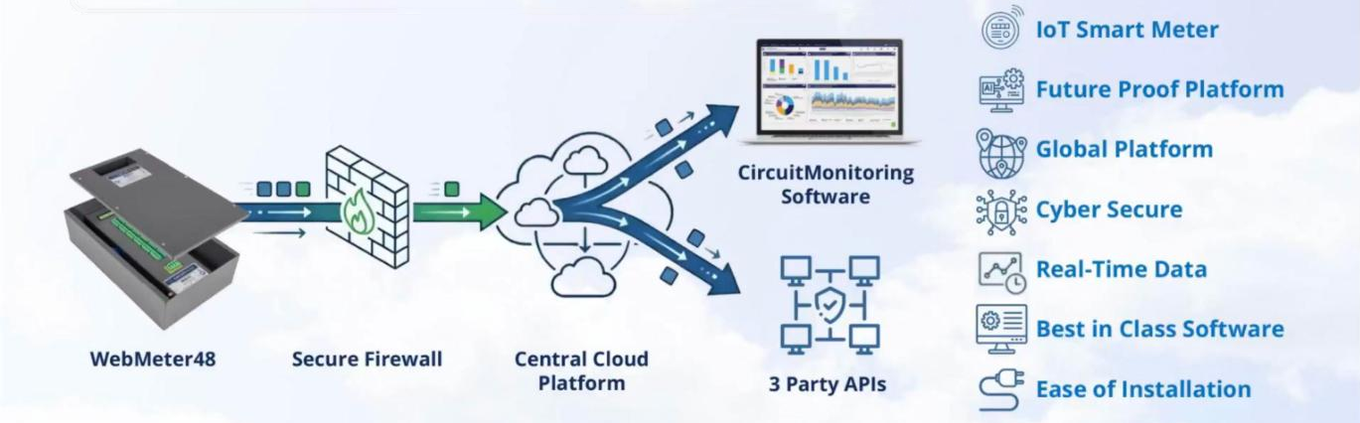
CircuitMonitoring visualizes circuit-level energy consumption and power-quality data across equipment, buildings and portfolios
Source: CircuitMeter.
CircuitMeter combines its WebMeter48 hardware with its cloud-based CircuitMonitoring software to provide detailed, circuit-level energy monitoring and analytics. A single WebMeter can monitor up to 48 electrical inputs and reports information to the cloud every two seconds. With the use of its JPulse-4 hardware, it can monitor additional inputs such as water and gas usage. Its high sampling rate (up to 200,000 hertz) enables detailed power-quality analysis, while the software provides real-time and historical data across equipment, buildings and portfolios. It also provides flexible options for exporting data into other systems.
CircuitMeter believes it offers disruptive affordability for a high-end submetering solution. Relative to competitors, it offers lower hardware, installation and monitoring costs. For example, since one WebMeter can cover up to 48 inputs, customers can monitor more circuits with less hardware, while remote verification and correction can reduce follow-up installation work. Larger competitors generally compete on installed base, channel reach and the ability to provide metering as part of a broader electrical system.

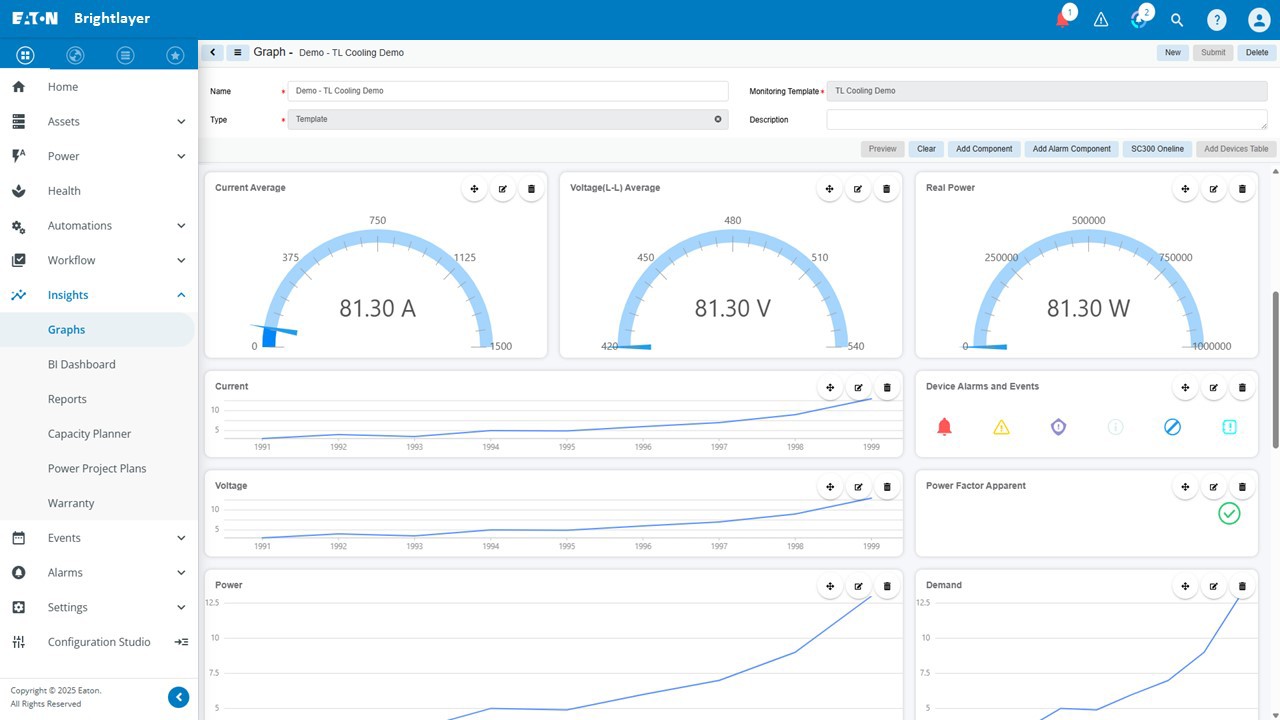
Eaton (ETN) is a publicly traded Ireland-domiciled power management company with $27.4 billion in 2025 sales and approximately 97,000 employees. Its Electrical Americas and Electrical Global businesses accounted for $20.1 billion of 2025 sales and serve data centers, commercial buildings, industrial facilities, utilities, residential markets and machinery original equipment manufacturers. It sells through distributors, resellers and manufacturers’ representatives as well as directly to original equipment manufacturers, utilities and other users.
Eaton’s Brightlayer EPMS software provides visibility and control needed to prevent outages
Source: Eaton.
Eaton’s metering portfolio ranges from its Power Xpert energy meters and branch-circuit systems to advanced power-quality meters. Its branch products can monitor individual circuits, including electricity used by outlets and small equipment, while higher-end meters capture sub-second harmonics and are appropriate for monitoring advanced machinery and sophisticated electronic equipment. Eaton also offers software that can monitor Eaton and third-party equipment and can export data to third-party solutions.
Eaton’s main advantage is the breadth of its offering. Metering can be purchased as part of a much larger Eaton electrical system that includes switchgear, panelboards, circuit protection and other power equipment, supported by a large distributor and contractor network. Eaton can also address retrofit applications, and its meters support standard communication protocols that allow data to flow into other building and energy-management systems. Smaller competitors generally compete on price, easier installation for specific use cases or by offering more-specialized analytics.

Eyedro Green Solutions is a privately held software and electronics company founded in 2009 and based in Waterloo, Ontario. The company has less than 50 employees and has customers in more than 160 countries. It offers real-time energy monitoring products for homes and businesses, including multifamily residential, retail, industrial, data center, electric vehicle, solar and machine-monitoring applications. It sells directly and through distributors and value-added resellers.
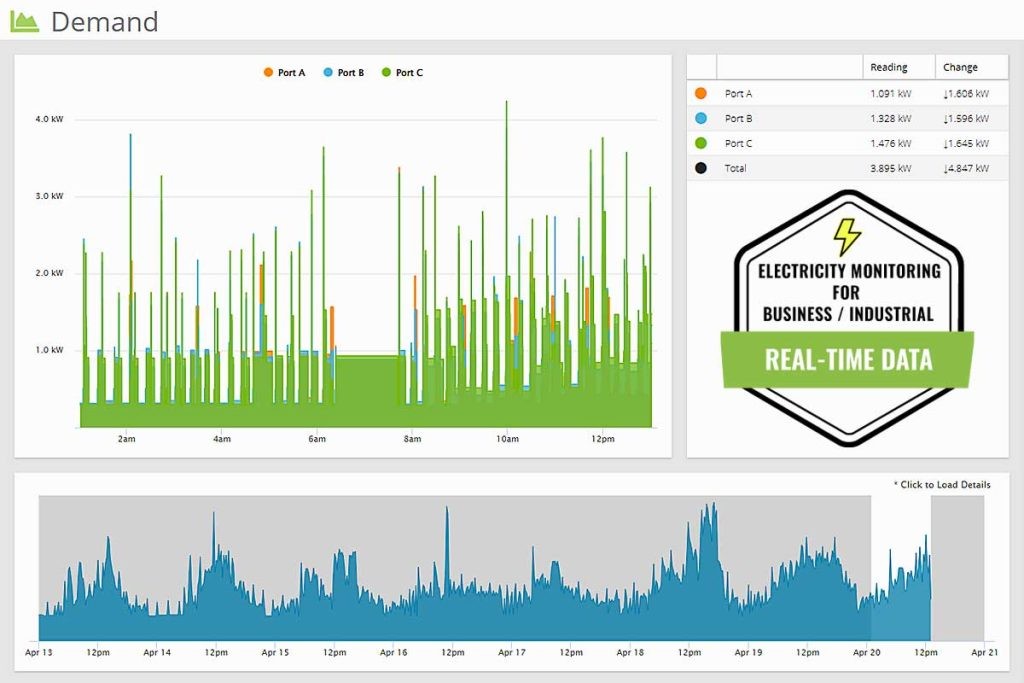
MyEyedro displays real-time electricity use, demand, cost and bill projections through a cloud-based monitoring dashboard
Source: Eyedro.
Eyedro offers a variety of meters that are ideal for residential and commercial environments with three-phase electrical panels. Its split-core sensors clamp on existing electrical wires, allowing users to measure electricity at the building, panel and circuit levels without disconnecting power. Its in-line meters sit between power-consuming equipment and the electrical outlet to measure electricity usage at the device level. The systems send data to its MyEyedro cloud software for usage, cost and trend analysis. The software generates alerts and reports and can be accessed by third-party solutions.
Eyedro’s main advantage is simplicity. Eyedro markets its commercial monitoring systems as easy to install and affordable, with installation in as little as 10 minutes. Its clamp-on sensors can be added without disconnecting existing wires, and its three-phase meter uses a plug-in voltage adapter rather than requiring additional voltage wiring inside electrical panels. The platform is a good fit for home energy monitoring, multi-tenant billing, energy audits and equipment monitoring where customers mainly want clear usage and cost data. Its solution is not designed to capture sub-second harmonics or for exceptionally complex or sophisticated environments.

GridPoint is a privately held Reston, Virginia-based energy management company with around 200 employees founded in 2003. Its GridPoint Intelligence platform is deployed across more than 20,000 commercial buildings and has delivered nearly $1.5 billion in cumulative customer energy savings. The company raised $45 million in 2025, including $20 million from Marunouchi Innovation Partners, following a $75 million strategic raise led by Goldman Sachs Asset Management in 2022. GridPoint sells through resellers, system integrators, original equipment manufacturers and distributors.
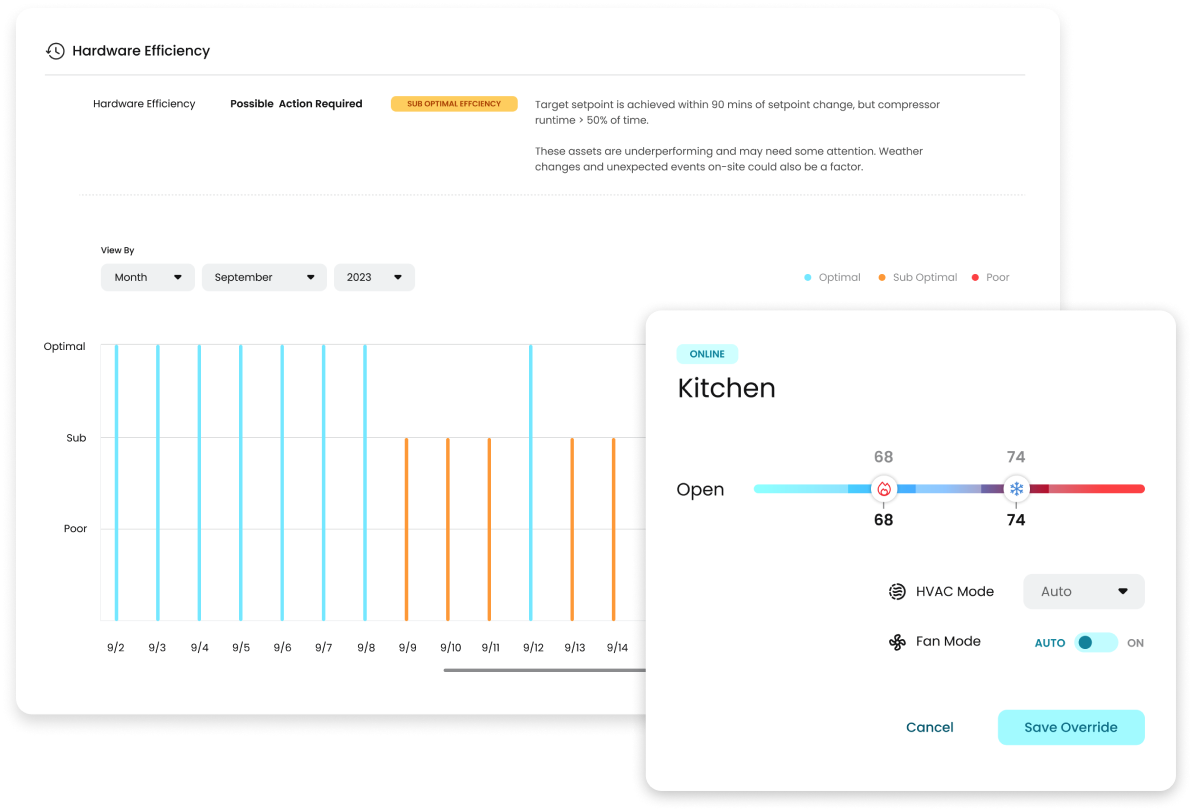
GridPoint energy management platform identifies HVAC efficiency issues and enables remote equipment control to improve building performance and reduce energy costs
Source: GridPoint.
GridPoint measures electricity at the building level and at the equipment level (e.g., HVAC, lighting and refrigeration units). The same platform can monitor equipment health and environmental conditions and automatically adjust HVAC schedules, temperature settings and lighting to reduce energy use or peak demand. Customers can manage one building or a portfolio of locations through the same software.
GridPoint’s main advantage is that it combines metering with automated building control. Instead of only showing where electricity is being used, the system can act on the data by changing HVAC and lighting schedules or reducing load during peak periods. This works particularly well for multisite operators such as restaurants, retailers and convenience stores. Its solution does not report sub-second harmonic analysis and it does not compete in the market for monitoring wear on heavy machinery or sophisticated electronic equipment.

Packet Power is a privately held Minneapolis-based provider of wireless power and environmental monitoring solutions founded in 2008. The company has around 20 employees, is mostly self-funded with limited angel investment and debt, and serves customers across 30 countries and six continents. It develops and manufactures its hardware and software in house and serves critical facilities across data centers, telecom, government, retail, universities and other markets.
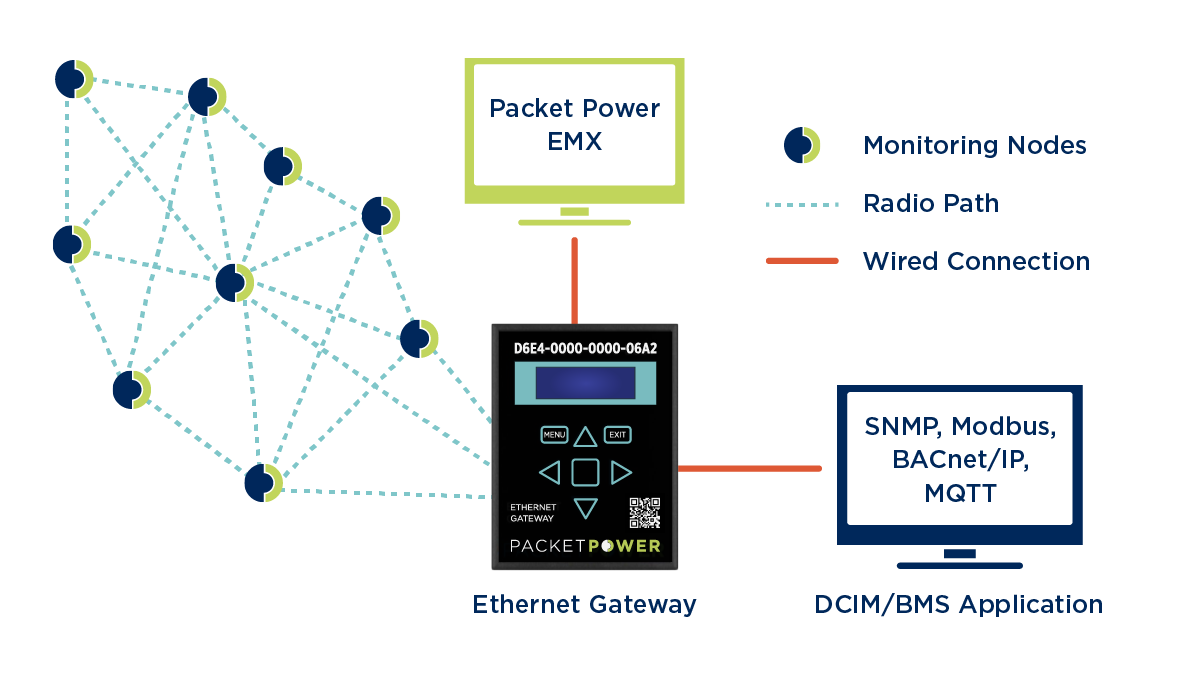
Packet Power’s Wireless Gateway empowers users to create a customized system to address their needs
Source: Packet Power.
Packet Power provides wireless monitoring of electricity use as well as a wide range of other facility conditions such as temperature, humidity, pressure and water leaks. Its electrical meters can scale from monitoring individual pieces of equipment to electrical panels and entire facilities. Its self-configuring wireless network eliminates most communications wiring and can generally be installed without taking equipment offline. Data can be viewed through Packet Power’s own EMX monitoring software or sent into software customers already use to manage their facilities.
Packet Power differentiates itself through its wireless connectivity, which enables easy installation in many environments, its flexibility to work with existing systems and its ability to monitor both power and environmental conditions. While competitively priced, its primary advantage is the lower installation effort enabled by its wireless design. Packet Power is generally used for capacity planning and operational monitoring, with customers often viewing data reported in 15-minute intervals. Packet Power is not ideal for use cases requiring microsecond sampling and reporting to capture harmonics (for example, on high-end digital equipment) or in environments where a wireless solution is not practical.

Schneider Electric is a publicly traded French company with about $47 billion in 2025 revenue, 160,000 employees, and customers in over 100 countries. It focuses on electrical energy management and industrial automation in power-intensive markets including data centers, commercial real estate, healthcare, industrial facilities, semiconductors and transportation. It serves customers through an expansive network of electrical contractors, distributors, system integrators and original equipment manufacturers, and its products are sold under many brand names including APC, ASCO and, most relevant for submetering, PowerLogic, Square D and EasyLogic.
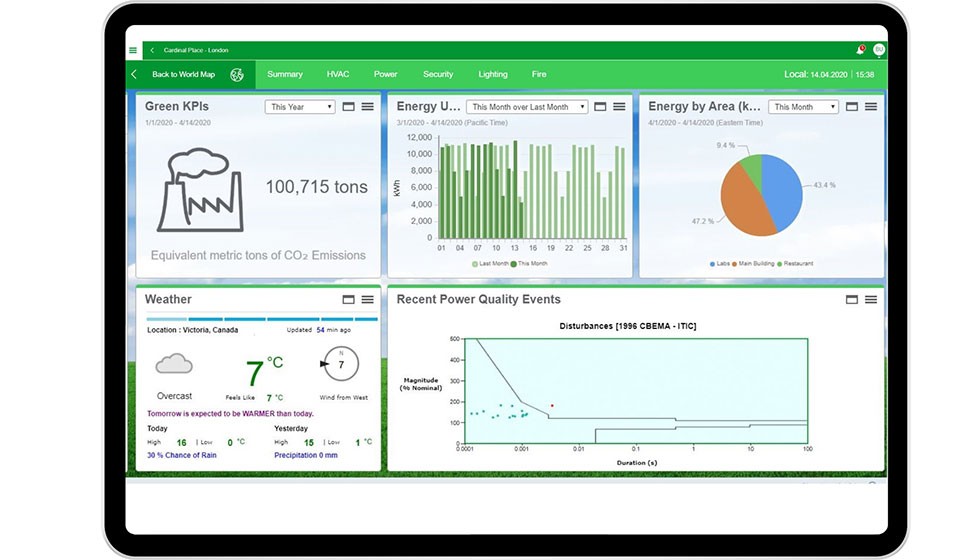
Schneider’s EcoStruxure Power Monitoring Expert centralizes electrical, HVAC and energy-use data to monitor facility performance and efficiency
Source: Schneider Electric.
This industry leader’s metering portfolio ranges from solutions that address simple needs (its EasyLogic lineup) to its flagship PowerLogic ION9000, which in some cases can sample at 10 million hertz. Data from its own and other data sources can be analyzed through an appropriate solution from its EcoStruxure and Planon facility management software.
The breadth and flexibility of its solutions combined with its vast array of distribution channels and partners makes Schneider Electric a formidable force in the industry. It can compete well for most use cases ranging from monitoring a single circuit to integrated end-to-end electrical metering and management systems connected with multiple third-party systems. Further, it’s easy for users to find distributors and contractors familiar with installing and servicing the equipment. While competitively priced, Schneider Electric is generally not the low-cost provider, and some competitors compete on price. Others highlight solutions optimized for very specific use cases or environments. Finally, some competitors market exceptional data transmission capabilities in a heterogenous environment, implying solutions from leading companies like Schneider Electric work best in their own homogenous environments.

Siemens is a publicly traded German industrial conglomerate with $87 billion in fiscal 2025 (September) revenue and 318,000 employees across its industry, infrastructure, mobility and healthcare businesses. Its electrical-monitoring and submetering products are part of Siemens Smart Infrastructure, a $25 billion, 79,400-employee division that also covers grid control, power distribution, building automation and fire safety, and sells into commercial buildings, data centers, industrial facilities and multi-tenant properties. Siemens sells through the same electrical contractors, distributors and engineers who already specify its switchgear and panelboards, under the Sentron and SEM3 brand names.
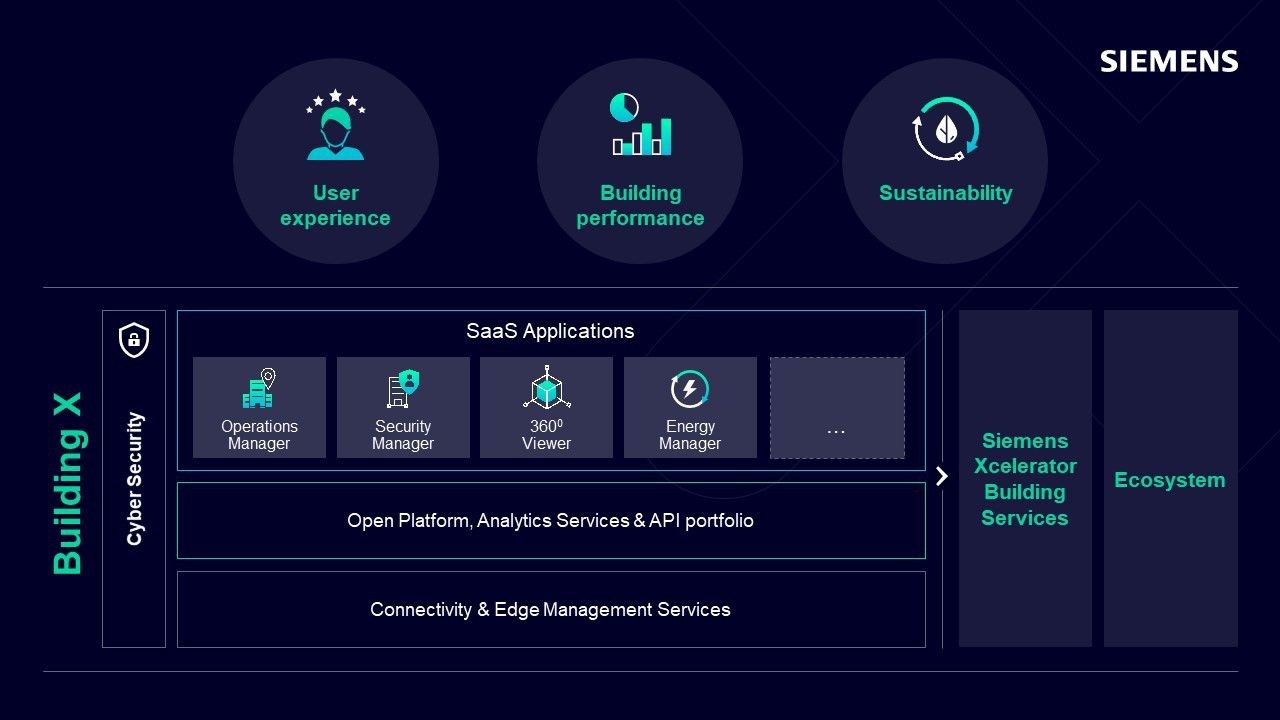
Siemens’ Building X Data Visualizer brings building and infrastructure data into configurable dashboards for real time monitoring and analysis
Source: Siemens.
The product line ranges from basic Sentron panel meters up to SEM3, a modular branch-circuit metering system built for multi-tenant billing. Both are designed to ship inside new Siemens panelboards and switchgear rather than to be sold as standalone retrofits. Data from these systems flows into Siemens’s Sentron Powercenter and Building X software or into to third-party systems via standard protocols like Modbus and BACnet.
Siemens’ advantage is that its metering is delivered with the broader electrical infrastructure it supplies. Siemens electrical infrastructure is already the default choice for a large share of new construction of commercial, industrial and data center facililties, so its meters typically come along with a much bigger electrical order rather than being sold on their own. Competitors focus more on retrofit opportunities, where adding metering to an existing, mixed-vendor panel is not an easy or cheap option with Siemens solutions. Further, smaller competitors typically can offer faster installation, lower cost, or analytics built for specific use cases.

Verdigris Technologies is a privately held electrical intelligence company founded in 2012 and headquartered in Moffett Field, California. The company historically served a broad range of commercial and industrial customers but has increasingly focused on data centers, including large telecom and hyperscale facilities. Verdigris has about 90 employees and has raised approximately $70 million to date, including capital from Verizon Ventures, DCVC, Solea Energy and Southwire.
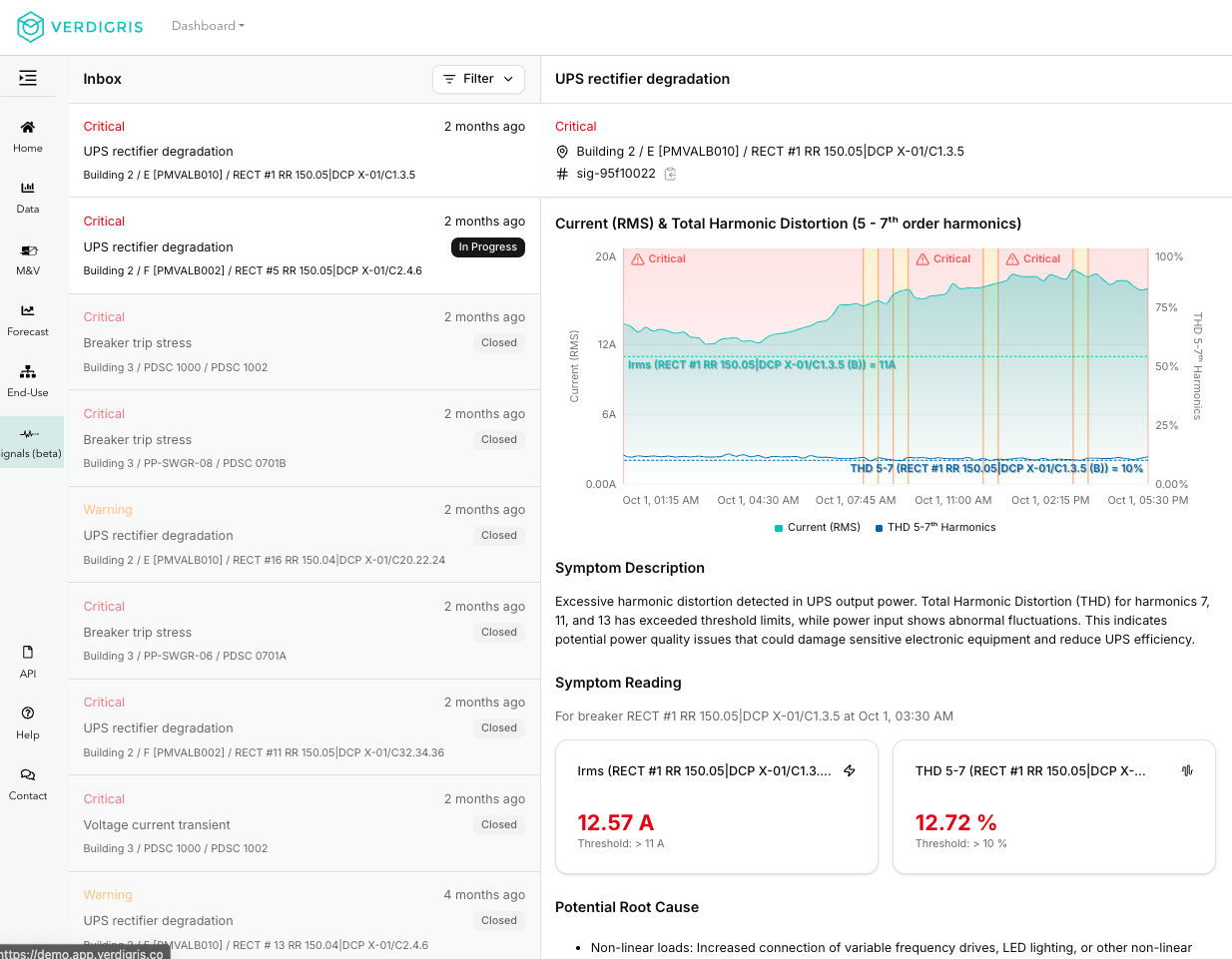
Verdigris Signals continuously monitors power quality to identify equipment degradation and potential failures before downtime occurs
Source: Verdigris.
Verdigris combines circuit-level sensors with its Signals software that captures and analyzes high-frequency electrical data. Its sensors sample at 8,000 hertz, and a single gateway can monitor up to 42 conductors. Importantly, Verdigris provides continuous monitoring and visualization at this sample rate – not just notification when pre-defined limits are tripped. As a result, it can identify novel issues in power quality, equipment degradation, unusual load behavior and available electrical capacity that trigger-based reporting solutions might miss.
Verdigris’s main advantage is its continuous reporting and visualization capabilities at a high sample rate. Verdigris is therefore particularly well suited for AI data centers and other environments where understanding rapidly changing electrical loads is important.
IoT index nearly flat from a year ago
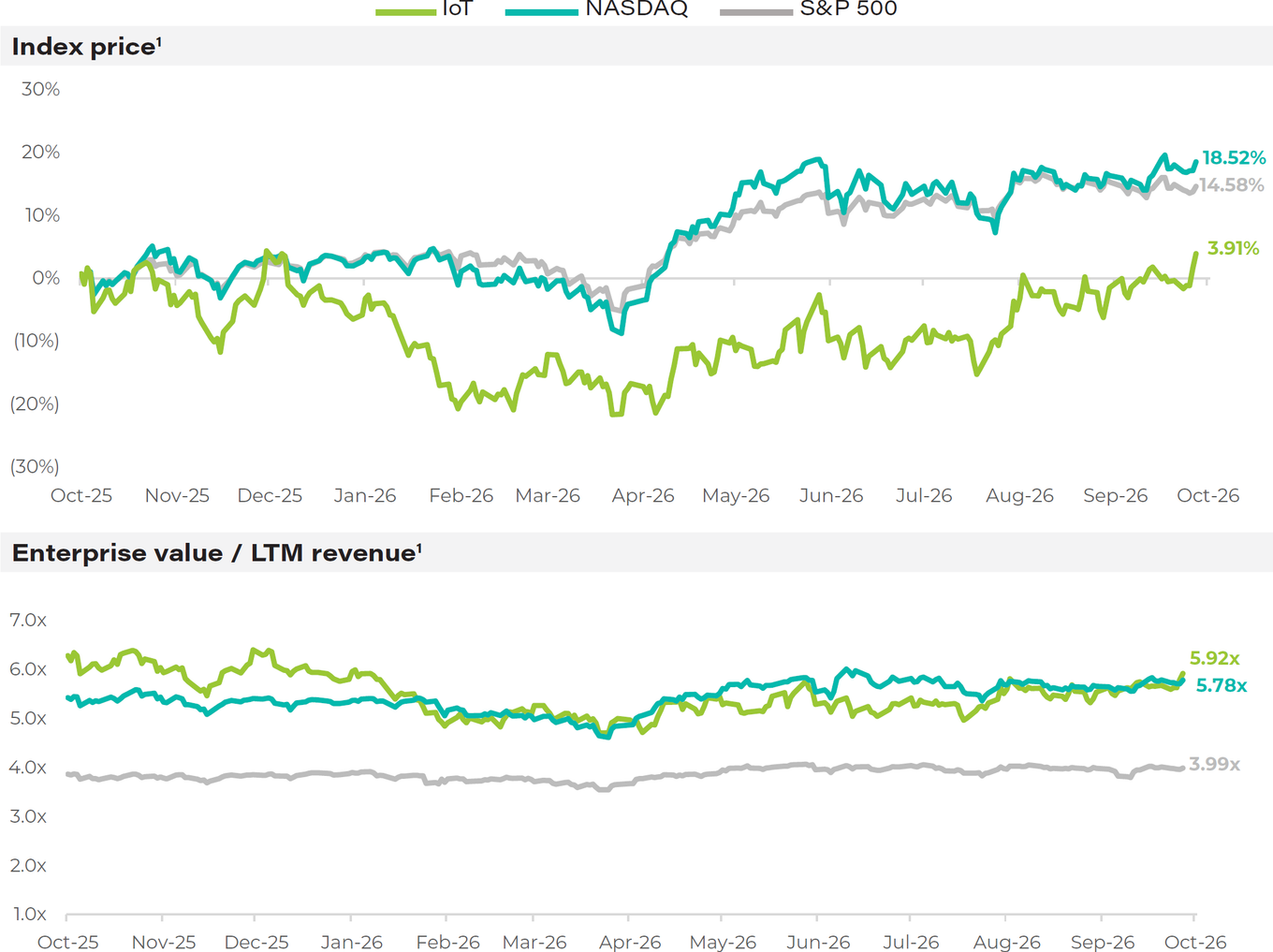
The First Analysis Internet of Things Index gained 3.9% over the one-year period ended Oct. 2, well short of the S&P 500’s 14.6% gain and the Nasdaq’s 18.5% gain over the same period. The index peaked at 4.4% in December before declining as much as 22% in late March.
Stock price performance varied widely across the 19 IoT companies in the index. Among the gainers, Semtech (SMTC) rose 186%, while Digi International (DGII) rose 106%, Ituran Location and Control (ITRN) rose 45%, and Lantronix (LTRX) rose 40%. Among the declining stocks, Verra Mobility (VRRM) fell 88%, Inseego (INSG) fell 72%, PowerFleet (AIOT) fell 48%, and Cerence (CRNC) fell 36%. Absent Semtech’s gain, the index would have been down materially, as Semtech contributed 15.3 points due to its relatively large market cap.
Internet of Things public comparables* ($ in millions)
| Company | LTM revenue |
Rev growth ’25A–’26E |
Rev growth ’26E–’27E |
LTM gross margin |
LTM EBITDA margin |
EV/rev ’26E |
EV/rev ’27E |
EV/EBITDA¹ ’26E |
EV/EBITDA¹ ’27E |
|---|---|---|---|---|---|---|---|---|---|
| Airgain (AIRG) | $51.4 | 9.2% | 17.6% | 43.4% | (8.5%) | 1.01x | 0.86x | 38.2x | 10.3x |
| Alarm.com (ALRM) | 1,061.0 | 7.1% | 4.7% | 65.8% | 15.8% | 2.60x | 2.48x | 12.7x | 11.8x |
| Arlo Technologies (ARLO) | 587.1 | 11.8% | 5.6% | 44.6% | 2.5% | 2.10x | 1.99x | 11.6x | 9.9x |
| Cerence (CRNC) | 309.5 | (15.4%) | 10.3% | 78.7% | 14.1% | 1.59x | 1.44x | 11.6x | 5.9x |
| CEVA (CEVA) | 115.7 | 14.0% | 13.3% | 87.5% | (4.9%) | 6.73x | 5.94x | 41.8x | 29.0x |
| Digi International (DGII) | 506.2 | 22.5% | 6.2% | 64.9% | 22.7% | 5.38x | 5.07x | 19.0x | 17.2x |
| Impinj (PI) | 371.5 | 7.9% | 20.3% | 52.9% | 2.4% | 15.22x | 12.65x | NMF | NMF |
| Inseego (INSG) | 172.6 | (7.1%) | 10.2% | 41.1% | (3.2%) | 0.83x | 0.75x | NMF | 19.4x |
| Ituran Location and Control (ITRN) | 393.2 | 16.4% | 5.4% | 50.0% | 26.7% | 2.26x | 2.15x | 8.4x | 7.9x |
| Karooooo (KARO) | 345.9 | 19.7% | 17.5% | 68.0% | 38.8% | 4.92x | 4.19x | 11.9x | 10.3x |
| Lantronix (LTRX) | 120.9 | 8.4% | 19.3% | 43.8% | 0.0% | 2.24x | 1.88x | 40.0x | 18.4x |
| Napco Security Tech. (NSSC) | 202.3 | 9.2% | 8.2% | 59.0% | 31.3% | 5.54x | 5.12x | 16.8x | 15.9x |
| PowerFleet (PWFL) | 450.4 | 6.2% | 10.9% | 55.7% | 19.1% | 1.39x | 1.26x | 6.2x | 4.7x |
| Samsara (IOT) | 1,847.6 | 26.4% | 20.0% | 76.4% | 1.7% | 11.16x | 9.30x | 49.0x | 38.9x |
| Semtech (SMTC) | 1,174.2 | 41.6% | 29.6% | 52.9% | 15.3% | 12.45x | 9.61x | 45.2x | 25.7x |
| SmartRent (SMRT) | 151.2 | 5.1% | 21.8% | 36.3% | (10.6%) | 0.89x | 0.73x | 46.4x | 17.7x |
| Trimble (TRMB) | 3,782.9 | 9.6% | 7.9% | 71.8% | 23.3% | 3.73x | 3.46x | 12.5x | 11.4x |
| Tuya (TUYA) | 340.8 | 12.6% | 11.5% | 47.2% | 8.7% | 0.18x | 0.16x | 2.0x | 1.4x |
| Verra Mobility (VRRM) | 1,007.0 | (1.6%) | (3.2%) | 55.7% | 35.5% | 1.51x | 1.56x | 4.0x | 4.5x |
| Average | $683.8 | 10.7% | 12.5% | 57.7% | 12.1% | 4.30x | 3.72x | 22.2x | 14.5x |
| Median | $371.5 | 9.2% | 10.9% | 55.7% | 14.1% | 2.26x | 2.15x | 12.7x | 11.6x |
Source: Capital IQ, First Analysis.
Notes: Public comparable company data shown above is as of Oct. 2, 2026. (1) EBITDA multiples less than 0 and greater than 50 labeled “not meaningful” (NMF). LTM = last 12 months. EBITDA = earnings before interest, taxes, depreciation and amortization.
The IoT index’s enterprise value multiple of trailing-12-month revenue as of Oct. 2 was 5.9, down from 6.3 at the beginning of the period, above the Nasdaq’s 5.8 ending multiple and above the S&P 500’s 4.0 ending multiple. Looking at forward multiples, the average enterprise value multiple of estimated revenue was 4.3 for 2026 and 3.7 for 2027. Impinj (PI) traded at the highest multiples for estimated 2026 revenue (15.2) and estimated 2027 revenue (12.7), followed by Semtech, with a 12.5 multiple for 2026 and 9.6 for 2027. Revenue is projected to grow 10.7% on average in 2026 and 12.5% in 2027.
First Analysis Internet of Things Index 1-year performance
Source: Capital IQ.
Notes: (1) Index performance is weighted by market cap. For the period from Oct. 6, 2025, through Oct. 2, 2026.
IoT M&A: Notable transactions include Link Labs and 75F
We highlight two noteworthy recent IoT acquisitions.
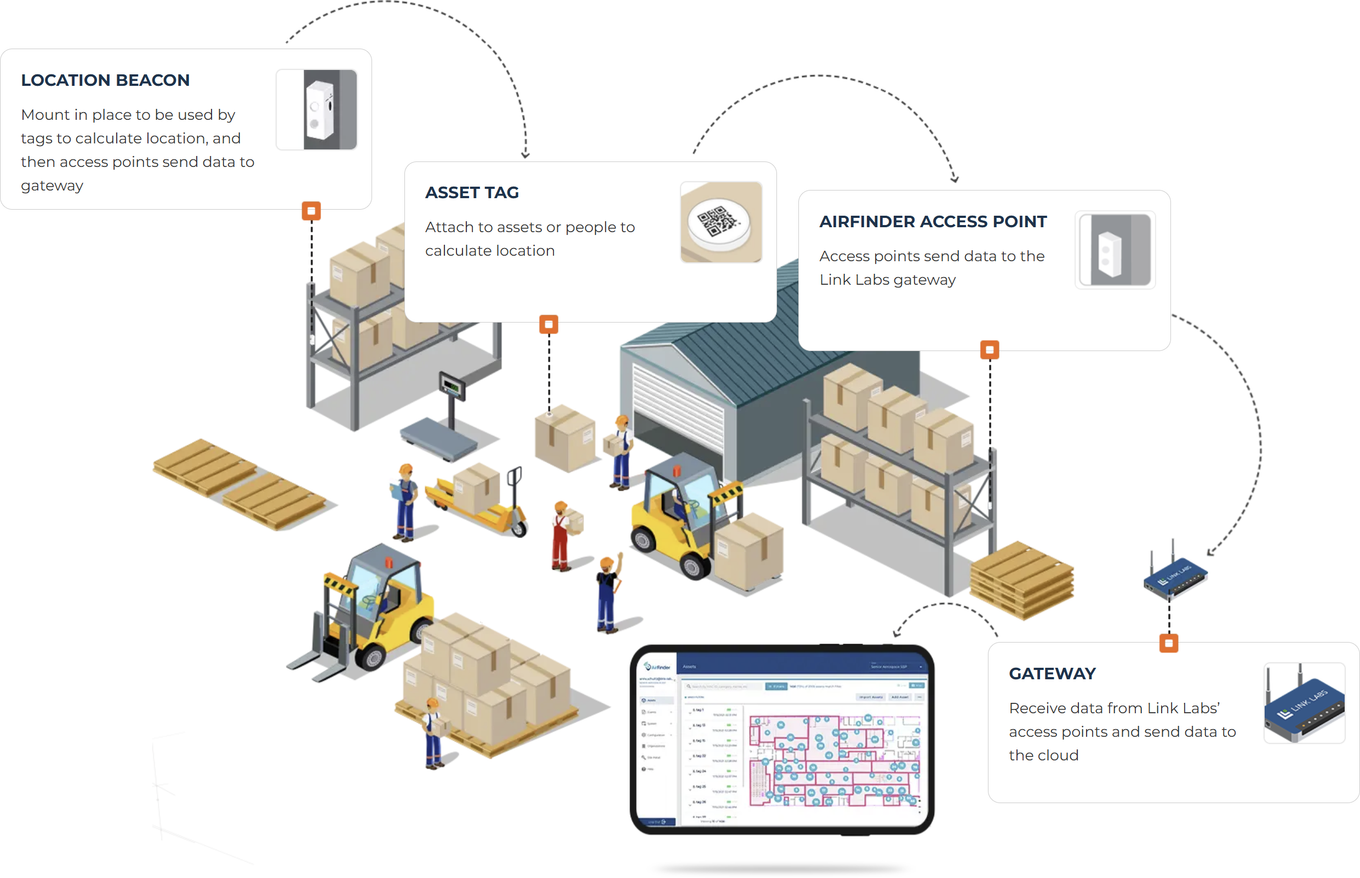
In June, Geotab announced it acquired Link Labs, a Maryland-based asset tracking company, in a transaction with undisclosed terms. Link Labs has spent more than a decade building IoT location technology that enables organizations to locate and monitor high-value assets with precision, at low cost, and at scale, serving customers spanning large enterprise, hospitality and construction. Its technology precisely tracks both indoor and outdoor assets across facilities, job sites and supply chains. Geotab cited reports indicating lost, stolen or misplaced equipment represents a $1 billion annual cost in the construction industry alone. For Geotab, a leader in connected operations and video telematics that connects approximately 6 million vehicles and assets for more than 100,000 customers, the transaction extends visibility to the equipment, tools and cargo that move alongside fleets.
Link Labs’ AirFinder Onsite tracks assets and people within facilities
Source: Link Lab.
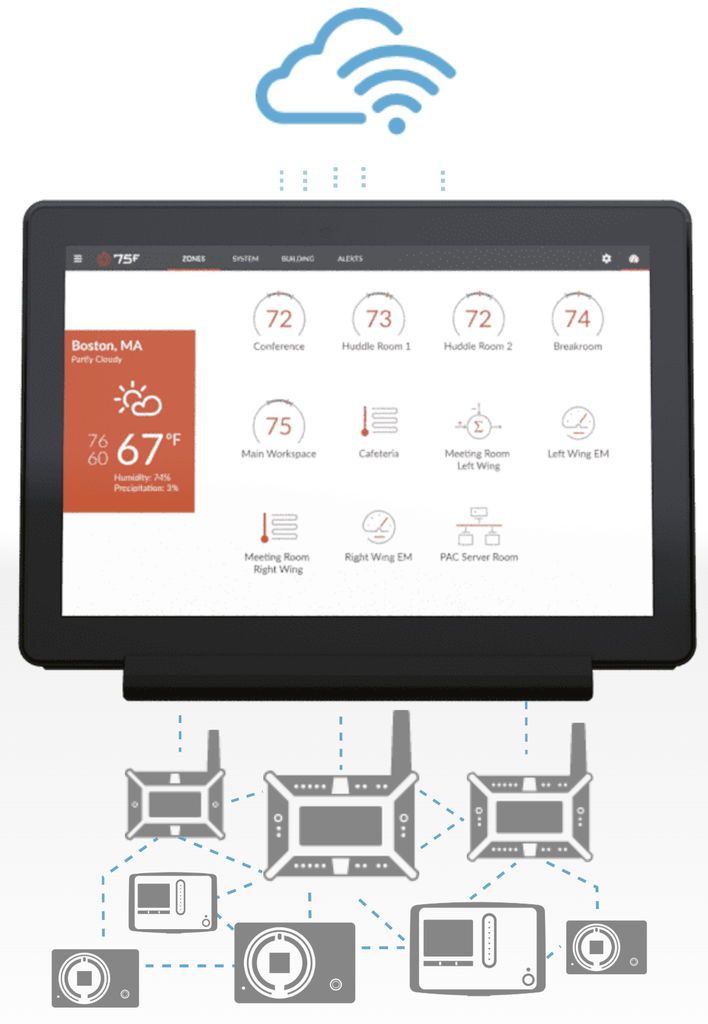
In July, Carrier Global (CARR) announced its acquisition of 75F, a provider of wireless, cloud-based building automation systems, in a transaction with undisclosed terms. 75F combines wireless sensors, controls, cloud software and AI-enabled automation to reduce installation time and simplify commissioning while optimizing energy efficiency and indoor air quality. The acquisition builds on Carrier’s existing relationship with 75F through Carrier ClimaVision and expands its building automation capabilities across large commercial buildings, data centers and smaller commercial properties. Carrier plans to combine 75F’s technology with its WebCTRL building controls, Abound predictive analytics and Nlyte operational intelligence platform. It also plans to incorporate 75F’s AI and automated commissioning capabilities into its large commercial platforms, including the QuantumLeap thermal management suite for data centers.
75F’s Central Control Unit connects wireless sensors and controllers to the cloud
Source: Carrier Global.
Select recent M&A transactions(sorted by date of announcement, $ in millions)
| Date | Target | Target business description |
Buyer | Enterprise value | Enterprise value/rev |
|---|---|---|---|---|---|
| 9/10/26 | Open Automation Software | Industrial data platform connecting controllers, databases and cloud services for edge-to-cloud connectivity, monitoring and automation | SeQent | Undisclosed | Undisclosed |
| 9/1/26 | Otodata | Remote tank-monitoring hardware and software delivering real-time inventory data, plus connected vehicle tracking and theft recovery | GI Partners | Undisclosed | Undisclosed |
| 8/25/26 | Connected Energy | Grid-edge software and connected load-control hardware helping utilities manage distributed energy resources and commercial and industrial demand | CLEAResult | Undisclosed | Undisclosed |
| 8/25/26 | IPS Group | Connected parking meters, payment technology and curb-management software enabling cities to monitor and manage smart-parking infrastructure | Nayax (NYAX) | $350.0 | 3.9x |
| 8/6/26 | EKOS | Cloud-connected fleet and energy management software integrating fuel-site monitoring, vehicle assets, fuel controls and EV charging | Vontier (VNT) | $79.0 | 4.9x |
| 7/23/26 | 75F | Wireless sensors, cloud software and intelligent controls that automate HVAC, optimize energy use and improve indoor air quality | Carrier Global (CARR) | Undisclosed | Undisclosed |
| 7/8/26 | LHP Telematics | Industrial telematics platform capturing equipment location, utilization, engine hours and fault codes for OEMs, dealers and rental fleets | VitalEdge Technologies | Undisclosed | Undisclosed |
| 7/7/26 | Vecima | Nero Global Tracking software providing GPS-based fleet and asset visibility for industrial operators, municipalities and restoration contractors | Lantronix | $11.5 | Undisclosed |
| 6/30/26 | Link Labs | IoT location technology providing indoor and outdoor tracking of tools, equipment and other high-value enterprise assets | Geotab | Undisclosed | Undisclosed |
| 6/24/26 | IoT assets of Identiv | RFID- and Bluetooth-enabled tags and labels that connect physical products to digital systems for tracking, identification and supply-chain visibility | Trackonomy Systems | $25.0 | Undisclosed |
Source: Capital IQ, First Analysis.
IoT private placements: Notable investments include Ranchbot and Terminal
We highlight two noteworthy IoT private placements in the third quarter.
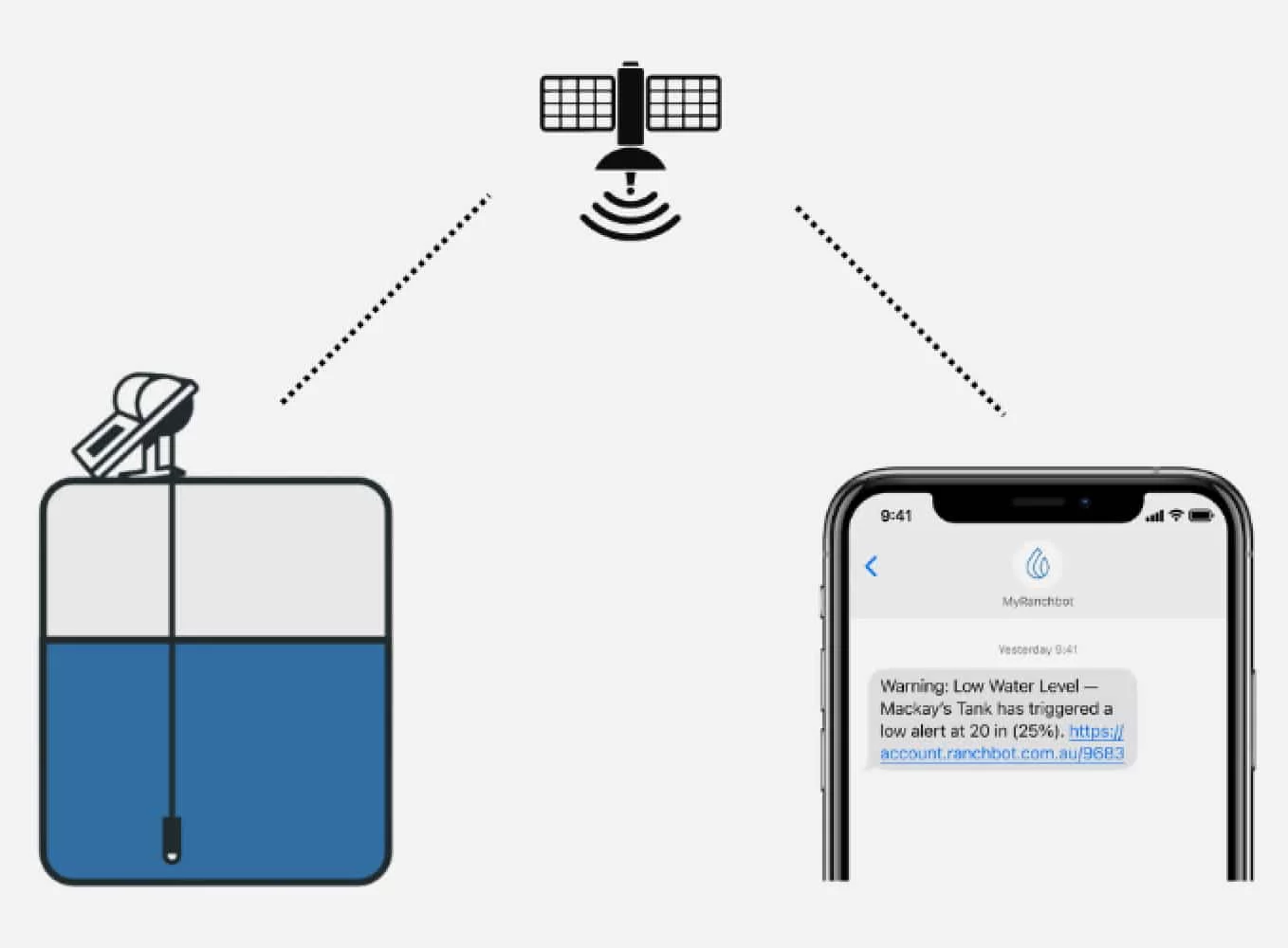
In August, Ranchbot announced a funding of more than $15 million in a round led by Lewis & Clark Partners with participation from Fulcrum Global Capital, Lever VC and others. Ranchbot provides remote water monitoring technology that enables ranchers to monitor water levels, rainfall and infrastructure through sensors and satellite connectivity. Its platform uses rugged sensors and near real-time satellite connectivity to enable ranchers to monitor water conditions from their phone regardless of how remote their ranch is. The company serves more than 12,000 customers managing approximately 10 million beef cattle and 15 million sheep across North America, Australia and other markets. (It operates as Farmbot in Australia.) Proceeds will support U.S. team growth, hardware and software development, additional ranch monitoring applications beyond water, and a new global headquarters in Fort Worth, Texas.
Ranchbot’s tank sensors trigger automatic low-water alerts by satellite with no cell service required
Source: Ranchbot.
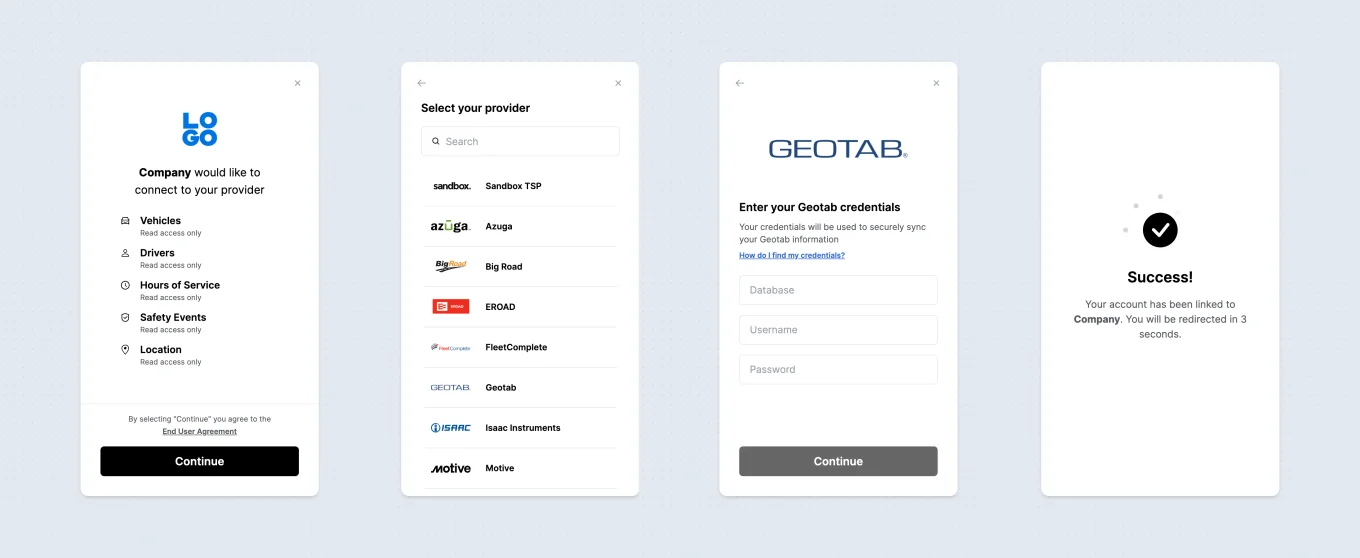
In July, Terminal announced a $20 million Series A financing led by Battery Ventures with participation from new strategic investors Intact Private Capital and Penske and existing investors Y Combinator and Wayfinder Ventures. The round brought total funding to $26 million since the company’s founding in 2023. Terminal provides telematics data infrastructure for the commercial fleet industry, connecting customers to more than 325 telematics service providers through a single integration. Its platform validates incoming data, manages consent and authorization, and standardizes information such as GPS location, safety events, fault codes and vehicle statistics. This reduces the need for insurers and fleet software companies to build and maintain separate integrations with individual providers. The financing will support enterprise expansion, building on multiyear agreements with major insurers that use Terminal’s data to assess driving risk and offer premium savings for safer driving.
Terminal makes integrating with telematics and electronic logging devices easier by providing a single unified API to consistently sync normalized data from multiple third-party telematics service providers
Source: Terminal.
Select recent private placements (sorted by date of announcement, $ in millions)
| Date | Company | Business description |
Investors | Raise type | Amount raised |
Total amount raised |
|---|---|---|---|---|---|---|
| 9/14/26 | Everywhere Communications | Connected-worker platform combining satellite and wireless devices with location monitoring, safety checks and emergency response for remote operations | NexPhase Capital | Growth | Undisclosed | Undisclosed |
| 9/10/26 | Motive | Connected fleet platform combining telematics hardware, AI dash cameras and software for driver safety, asset tracking and vehicle maintenance | General Catalyst Customer Value Fund | Growth | $1,300.0 | $2,176.2 |
| 9/9/26 | Wint | Water-management platform using real-time flow data and AI to detect leaks, prevent building damage and reduce water waste | LIP Ventures; Inven Capital | Series D | $36.0 | Undisclosed |
| 9/9/26 | Harmoni | Factory platform combining machine, radio frequency identification and operator data to automate shop-floor workflows and provide real-time production visibility | Bessemer Venture Partners | Series A | $10.0 | Undisclosed |
| 8/19/26 | Sonic Fire Tech | Building fire-protection systems combining infrared sensors, automated acoustic suppression and an app providing remote monitoring, alerts and system control | The Ohio Fund; Khosla Ventures; Third Sphere; AirAngels | Seed | $15.0 | Undisclosed |
| 8/10/26 | Ranchbot | Sensors, satellite communications and software enabling remote monitoring of water tanks, troughs, rainfall and agricultural infrastructure | Lewis & Clark Partners; Fulcrum Global Capital; Builders VC; Lever VC; Cultiv8 Livestock Technology Fund; Macdoch Ventures | Series B | $15.0 | Undisclosed |
| 8/4/26 | Buzz Solutions | Software for analyzing inspection imagery to monitor electric-grid assets, identify equipment defects and prioritize maintenance across power lines, substations and solar installations | S3 Ventures; GoPoint Ventures; HearstLab; Blackhorn Ventures | Series A | $20.0 | Undisclosed |
| 7/29/26 | Terminal | Unified telematics application programming interface connecting vehicle location, fuel and maintenance data across hundreds of providers for fleets, insurers and logistics companies | Battery Ventures; Intact Private Capital; Penske; Y Combinator; Wayfinder Ventures | Series A | $20.0 | $26.0 |
| 7/15/26 | Spectro Cloud | Software for deploying and managing edge computing and AI infrastructure across distributed industrial, logistics, retail and enterprise sites | Goldman Sachs Alternatives; AMD Ventures; Ericsson; LG Technology Ventures; Maximus | Series D | $100.0 | $260.0 |
| 6/30/26 | Omen AI | Sensors and analytics for continuously monitoring coolant, oil and water in data centers and industrial equipment to detect contamination, wear and early signs of failure | Nava Ventures; CRV; Vanderbilt University | Series A | $31.0 | $41.5 |
Source: Capital IQ, First Analysis.
Request full report
To access the full report, please provide your contact information in the form below. Thank you for your interest in First Analysis research.