
Quarterly insights: Supply chain
The state of AI adoption in supply chains

New technology adoption in supply chains has tended to lag some other sectors due to the complex and interconnected nature of the systems impacted by technology changes.
Industry participants are increasingly overcoming these fears given the power of AI technology. This was evident at conferences we’ve attended this year, including Manifest in Las Vegas and Modex in Atlanta.
To provide insight on how supply chain leaders are navigating the AI adoption challenge, we highlight five areas where AI seems to be working well and gaining traction in supply chains.
In each area, we highlight companies providing relevant AI-driven technologies. We think technology companies that support and enable the use of AI in these categories are well positioned to thrive as AI penetrates the supply chain market.
TABLE OF CONTENTS
- Pressure to adopt AI and the search for optimal paths
- Continuous monitoring and learning
- Data synthesis
- AI agents
- End-to-end visibility
- Digital twins
- The road ahead for supply chain AI
- Supply chain indices continue their downward trend, underperforming the market
- Supply chain M&A: Notable transactions include Idelic and MaintainX
- Supply chain private placements: Notable transactions include Stord and Swarm Engineering
Pressure to adopt AI and the search for optimal paths
In almost every economic sector, it’s widely thought companies that aren’t adopting AI today will lag competitively and lose out to companies that are. As a result, management teams face increasing pressure to map and implement optimal AI adoption plans. However, with AI technology and business models evolving at lightning pace, making long-term strategic decisions about AI adoption engenders risk of overspending or barreling forth in directions that might not increase productivity or might even reduce it.
We believe this to be especially true in the supply chain sector, where making even minor changes in supply chains can risk catastrophic disruptions due to the difficulty of understanding how changes can propagate through these typically large and complex systems. For this reason, new technology adoption in supply chains has tended to lag other sectors, as illustrated by the relatively late adoption of cloud systems compared to adoption in most other industries. Similarly, AI deployment in supply chains is limited. In cloud software company Sage’s 2026 State of Supply Chain Report, only 10% of 200 retail and wholesale supply chain operators said they had AI live in supply chain workflows.
That said, we are seeing evidence of increasing AI adoption in the supply chain market, with some noteworthy data points at the Manifest trade conference we attended in Las Vegas earlier this year. Manifest, presented by DHL, is one of the largest conferences aimed at the supply chain sector, drawing thousands of attendees from around the globe, including startups, investors and leading supply chain companies.
The conference featured numerous presentations in which supply chain leaders spoke about how they use AI today and how they envision using it in the future. For example, Chris Cutshaw, vice president of sales, managed solutions, at C.H. Robinson Worldwide, among the largest logistics providers in the world, spoke about the company’s “Lean AI” offering, a proprietary blend of AI, the company’s logisticians, and its lean operating model. He spoke about how agentic AI can enable intelligent execution, autonomous planning, and self-healing supply chains that orchestrate real-time adaptation to volatility within supply chains. C.H. Robinson is accomplishing this with its Always-on Logistics Planner, a suite of AI agents launched in 2025 that operates as a digital extension of its customers’ supply chain teams. Leveraging its contextual learning capability and combining it with task execution enables the proactivity necessary to orchestrate in real time.
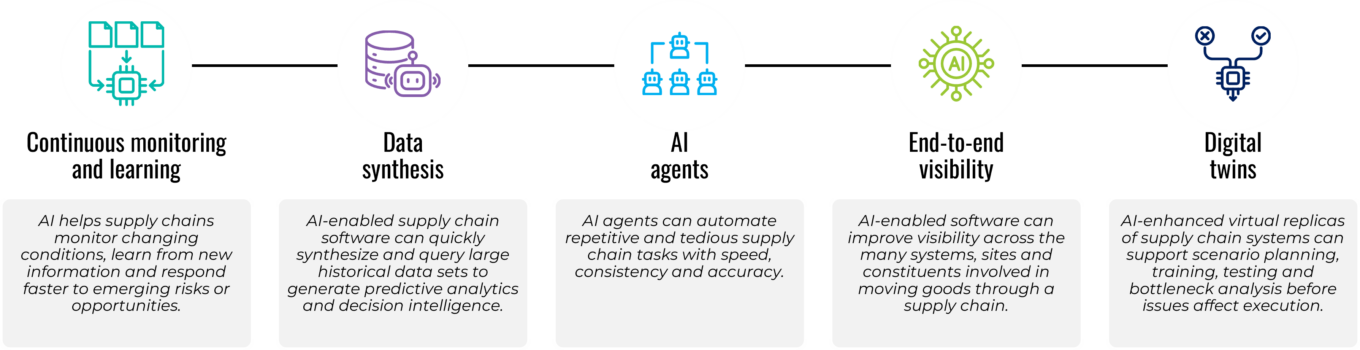
To provide further insight on how supply chain leaders are navigating the AI adoption challenge, we highlight five areas where AI seems to be working well in supply chains. In each area, we highlight companies providing relevant AI-driven technologies. We think technology companies that support and enable the use of AI in these categories are well positioned to thrive as AI penetrates the supply chain market.
Five areas where AI is working in supply chains
Source: First Analysis.
Continuous monitoring and learning
AI’s ability to continuously monitor all elements of supply chains provides the informational power to anticipate and act on problems and opportunities faster and more efficiently than in the past. For example, regulatory shifts and sudden cost spikes can cause supply chains to break. AI-enabled supply chain software that continually monitors and learns about supply chain regulatory and pricing-related conditions can minimize such breaks by enabling organizations to quickly anticipate and adjust for impacts that would otherwise be unforeseen. Such software can either make supply chain adjustments automatically or, where human participation is needed, provide the information necessary for personnel to quickly make optimal decisions. It can also help with forecasting, inventory management, logistics and supplier selection.

An example is LogistiVIEW, an AI-enabled warehouse execution platform that sits at the intersection of warehouse human labor, machinery and systems. Its platform orchestrates resources in real time and directs dynamic task allocation. As warehouses increasingly blend autonomous systems with frontline workers, LogistiVIEW’s execution layer becomes the connective tissue that makes hybrid operations coherent and efficient. LogistiVIEW is based in Cary, N.C., and backed by W.W. Grainger, Triangle Tweener Fund and Plug and Play Tech Center.
Data synthesis
Many supply chain companies sit on a wealth of data with no platforms in place to use it. Examples include operational data and resource planning data. AI-enabled supply chain software can quickly synthesize and query large supply chain data sets to generate predictive analytics and decision intelligence based on historical data. Given the risk-averse nature of the supply chain industry, insights based on historical data can be particularly valuable. Data synthesis is among the most relevant and widely adopted uses of AI in supply chains.
In this application category, we highlight Atomic, Dataviva, Hexight and HighByte.

Atomic provides unified supply chain planning software with AI-driven demand forecasting, inventory optimization, supply planning with automated purchase order generation, and rapid scenario planning built on a deterministic unit-level simulation. Atomic was built by former Tesla supply chain leaders who lived through the chaos of the Model 3 ramp. It was designed to replace spreadsheet-dependent planning that collapses under complexity and speed. Atomic’s architecture positions it as a native decision environment where AI planning agents operate. Atomic is based in New York and backed by DVx Ventures and Madrona Ventures.

For retail planning operations, Dataviva’s software provides continuous, machine-learning-driven demand forecasting, assortment optimization and price management inputs for execution systems. Retail planning, like other supply chain areas, has long suffered from a disconnect between insights based on data and execution. Systems don’t communicate, so decisions made in one system have to be manually translated into actions in another. Dataviva’s platform collapses that gap. Dataviva merged with Veltio in December 2025 and continues to operate under the Dataviva name. Dataviva is based in Atlanta and is backed by Big Pi Ventures.

Hexight provides an AI-native sales and operations planning platform for automated supply chain decision-making, demand and supply forecasting, and end-to-end operational planning. Supply chain disruptions have historically been managed with outdated, rigid tools, leaving companies to react to bottlenecks rather than prevent them. By continuously learning from decisions and exploring scenarios in real time, Hexight reduces late orders, minimizes excess inventory, and routes resources to the most impactful priorities. The platform streamlines complex planning processes at scale by automating root-cause analysis, surfacing actionable recommendations and aligning teams around a single plan with or without deep technical training. Hexight is based in Tel Aviv and is backed by Amplifier, 2i Ventures, MizMaa Ventures and Mensch Capital Partners.

HighByte provides an industrial data operations platform that connects, models and orchestrates operational data across plant floors and enterprise IT systems for global manufacturers. Industrial data has historically been siloed, trapped in disparate machines, files and legacy systems and treated as a byproduct of operations rather than a strategic asset. By contextualizing and standardizing data at the edge, HighByte reduces integration time, eliminates custom-coded point solutions, and routes data to its most valuable destinations across analytics, AI and cloud applications. The platform streamlines complex industrial environments at scale by modeling tens of thousands of data points, automating data pipelines, and delivering ready-to-use data to operational technology and IT teams alike with or without specialized technical expertise. HighByte is based in Portland, Maine, and is backed by Standard Investments, Exposition Ventures and Maine Venture Fund.
AI agents
AI agents can perform mundane, repetitive and tedious tasks tirelessly, attentively and with high accuracy. Examples include scheduling, email outreach, updating records in contact relationship management software, and alerting personnel to follow up on issues that require human involvement. Workers use AI agents as assistants so they can better focus on high-impact workflows and decisions. DeepVu and Prosera are examples of platforms that incorporate AI agents for supply chains.

DeepVu is a supply chain planning platform that uses generative AI agents, digital twins and supply chain knowledge graphs to produce resilient, real-time planning decisions for manufacturers, consumer packaged goods companies, retailers and distributors. DeepVu uses deep reinforcement learning agents trained on digital twin simulations that model both normal and shock scenarios, enabling the system to recommend actions that optimize performance regardless of supply chain conditions. DeepVu is based in San Ramon, Calif., and is backed by International Venture Partners, Plug and Play Tech Center and Berkeley SkyDeck.

Prosera provides AI software for enterprise supply chain automation. Its modular AI agents forecast demand and automate logistics. They integrate with enterprise resource planning, transportation management and warehouse management systems and deploy in customers’ clouds or behind firewalls. Manufacturing and process industries carry enormous institutional knowledge about plant operations that has historically lived in the heads of experienced engineers. Prosera’s platform encodes that knowledge into AI-assisted digital twins and simulation models built directly from engineering data, making it machine-readable and scalable. Prosera’s foundational layer of contextualized operational intelligence enables safe, reliable decisions in complex industrial environments. Prosera is based in Los Gatos, Calif., and is a bootstrapped company.
End-to-end visibility
AI-enabled software can enhance organizations’ ability to see conditions and actions across their entire supply chains. This is important, because hundreds or thousands of systems, sites and constituents across manufacturers, warehouses, distributors, logistics providers and retailers, to name just a few, can touch a product as it moves through a supply chain. Today, a few companies aim to construct platforms with 100% end-to-end visibility, but no such thing yet exists. Nonetheless, several companies have leveraged AI to offer substantially greater visibility into supply chains than was previously feasible. Examples include Cycle Labs, G2 Reverse Logistics and Osa Commerce.

First Analysis venture capital portfolio company Cycle Labs provides a supply chain testing automation platform that identifies process and system risk and break points as software is put into production or modified. As manufacturers, distributors, retailers and other supply chain participants increasingly need to use cloud technologies to respond to evolving markets, their fear that switching core systems can cause massive disruptions to their operations can slow adoption of essential technology. Automated testing addresses that concern. We think Cycle Labs, with one of the only platforms built to automatically test supply chain execution environments, is well positioned to benefit from this tailwind. Cycle Labs is based in Raleigh, N.C., and is also backed by Cofounders Capital, Jurassic Capital and North Coast Ventures.

G2 Reverse Logistics provides an agentic AI-driven reverse logistics platform for automated returns management, asset routing for returns resale and end-to-end returns orchestration. Returns and asset recovery have historically been treated as cost centers, generally written off as losses. By optimizing every step of the returns life cycle, G2 Reverse Logistics reduces operational costs, minimizes write-offs, and routes assets to the most profitable destinations. The platform streamlines complex returns processes at scale by automating decisions, reducing labor dependencies, and routing each item to its optimal next step – with or without human intervention. G2 Reverse Logistics is based in Pittsburgh and is backed by Dell Technologies Capital and Ryder Ventures.

Osa Commerce provides real-time visibility across orders, inventory and shipments with direct integrations to warehouse management systems, distributed order management, order management systems, transportation management systems and e-commerce platforms. Its AI-powered unified commerce platform ingests the complexity of supply chains across over 440 integrations and translates it into a single source of operational truth. With this broad visibility, the platform enables cost savings through optimized inventory and resource utilization, improved collaboration with suppliers and partners, and advanced analysis for better decisions. Osa Commerce is based in Alpharetta, Ga., and is backed by Plug and Play Tech Center.
Digital twins
Scenario planning is a powerful capability that can mitigate or avert failures in execution. To that end, virtual replicas of supply chain systems and sites can be used for employee training, system testing and system analysis both before and after these systems and sites are created. They can be used for capacity or load management and for mapping bottlenecks and other actual or potential problems. Adding an AI layer over these digital twins improves their utility for learning and testing. As noted above, digital twins play a role in several AI application categories. Here, we highlight Clearpepper and Sophus Technology.

Clearpepper is an AI-driven supply chain software platform for enterprises. It uses graph-based digital twins and modular intelligence for demand forecasting, inventory optimization, planning, simulation and agentic and autonomous orchestration. Global supply chain complexity has outpaced the ability of traditional planning tools to model it. Clearpepper’s architecture creates an integrated intelligence layer capable of mapping and reasoning over that complexity dynamically. Clearpepper leverages the kind of non-linear, multi-dimensional reasoning where AI excels. Clearpepper is based in Miami and is bootstrapped.

Sophus Technology is an AI-driven supply chain network design and optimization platform for business customers in manufacturing, retail, logistics and related industries. The platform is designed to determine where to put distribution centers, how to configure flows, and how to model trade-offs across cost, speed and resilience. Historically, this required specialized consultants and long project cycles. Sophus enables planners themselves to perform AI-driven, computationally intensive optimization network modeling, providing efficiency gains in the range of 10 to 20 times. Sophus also makes it possible to run sophisticated scenario analysis continuously rather than episodically. Sophus Technology is based in Ann Arbor, Mich., and backed by V-Capital, Ivy Capital and Weizhi Mathematics.
The road ahead for supply chain AI
AI adoption in supply chains is still early, but the five application areas highlighted here — continuous monitoring, data synthesis, AI agents, end-to-end visibility and digital twins — show that meaningful progress is underway. The companies profiled are using AI to address longstanding challenges that traditional tools have failed to solve at scale, and we believe those enabling AI in these categories are well positioned to capture significant value as adoption accelerates.
Supply chain indices continue their downward trend, underperforming the market
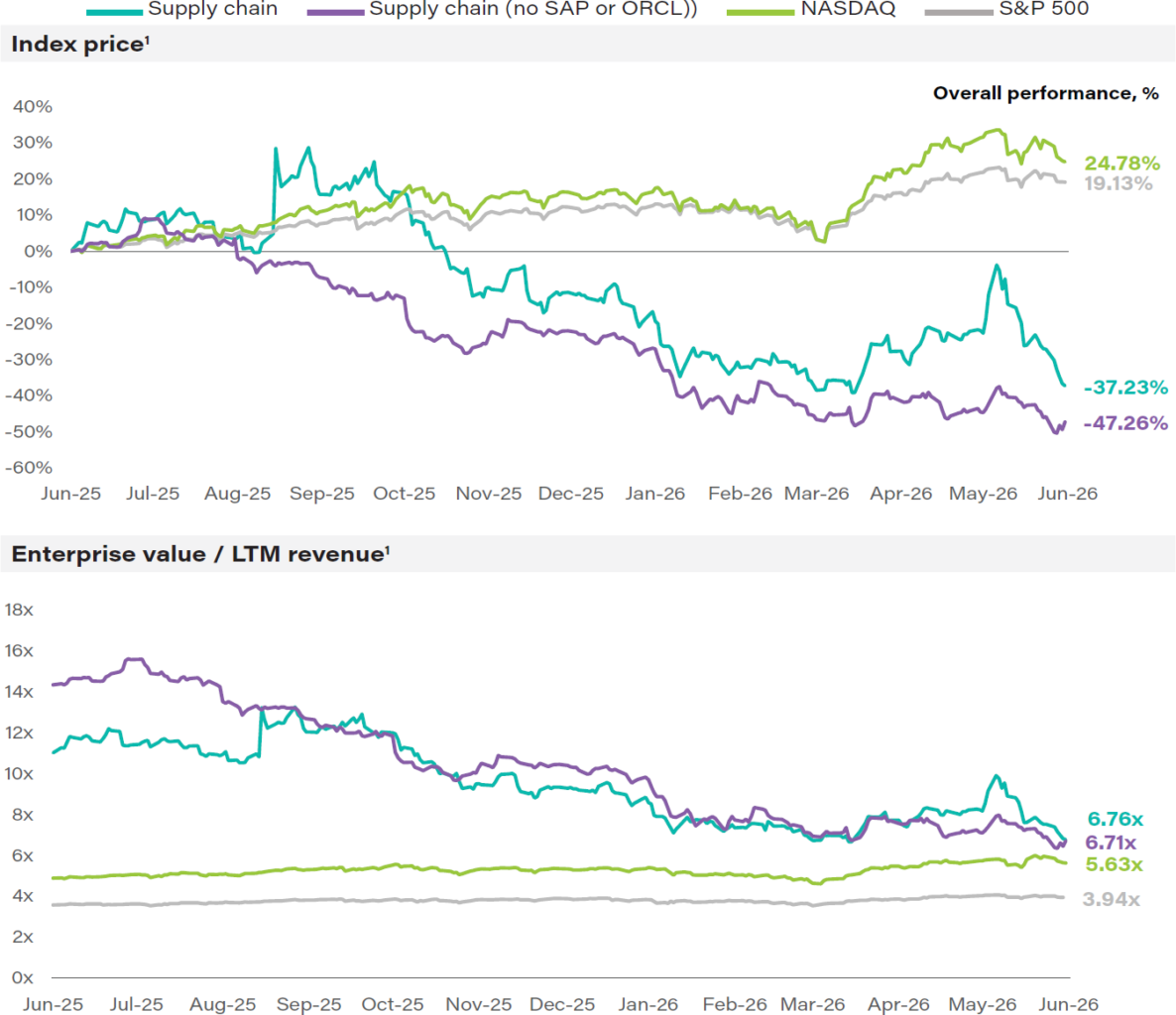
The First Analysis Supply Chain Index finished the one-year period ended June 26 down 37%. Excluding SAP (SAP) and Oracle (ORCL), which accounted for 92% of the index’s total market capitalization at the beginning of the period, the index was down 47%. The indices finished the period only a few points above their lows. In contrast, the Nasdaq gained 25%, and the S&P 500 gained 19%.
Among the ten constituent supply chain companies, only two were up over the period: Ramco Systems, which appreciated 56%, and PSI Software (PSAN), up 45%. WiseTech Global (WTC), down 71%, saw the largest decline.
Supply chain technology public comparables* ($ in millions)
| LTM rev. |
Rev. growth 2025A‑2026E |
Rev. growth 2026E‑2027E |
LTM gross margin |
LTM EBITDA margin |
EV/rev. 2026E |
EV/rev. 2027E |
EV/EBITDA 2026E1 |
EV/EBITDA 2027E1 |
|
|---|---|---|---|---|---|---|---|---|---|
| Descartes Systems Group (DSG) | $753.9 | 11.4% | 11.2% | 77.3% | 42.4% | 7.00x | 6.30x | 15.1x | 13.4x |
| Kinaxis (KXS) | $580.8 | 15.8% | 12.4% | 65.7% | 18.8% | 4.25x | 3.78x | 16.2x | 14.1x |
| Manhattan Associates (MANH) | $1,100.8 | 6.7% | 8.6% | 56.0% | 26.2% | 6.91x | 6.36x | 19.4x | 17.6x |
| Oracle Corp. (ORCL) | $67,357.0 | 25.6% | 40.0% | 65.8% | 45.3% | 7.42x | 5.30x | 13.3x | 9.6x |
| PSI Software SE (PSAN) | $327.3 | 0.0% | 10.0% | 15.3% | (4.2%) | 2.39x | 2.18x | 25.1x | 17.3x |
| Ramco Systems (RAM-COSYS) | $74.3 | 15.0% | 10.9% | 53.9% | 19.1% | 3.36x | 3.03x | 15.8x | 13.6x |
| ReposiTrak (TRAK) | $23.5 | 1.2% | 14.8% | 85.4% | 34.9% | 5.93x | 5.16x | 15.7x | 13.3x |
| SAP SE (SAP) | $42,589.0 | 9.1% | 11.6% | 73.7% | 31.1% | 3.89x | 3.48x | 12.2x | 10.6x |
| Tecsys (TCS) | $133.7 | 4.9% | 9.1% | 50.0% | 6.6% | 2.40x | 2.20x | 22.3x | 14.8x |
| WiseTech Global (WTC) | $1,069.7 | 39.4% | 12.0% | 81.1% | 40.0% | 6.30x | 5.63x | 14.3x | 11.4x |
| Average | $11,401.0 | 12.9% | 14.1% | 62.4% | 26.0% | 4.99x | 4.34x | 16.9x | 13.6x |
| Median | $667.4 | 10.3% | 11.4% | 65.8% | 28.7% | 5.09x | 4.47x | 15.8x | 13.5x |
Source: Capital IQ, First Analysis.
Notes: Public comparable company data shown above is as of June 26, 2026.
(1) EBITDA multiples less than 0 and greater than 50 labeled “not meaningful” (NMF). LTM = last 12 months. EBITDA = earnings before interest, taxes, depreciation and amortization.
The index’s enterprise value multiple of trailing 12-month revenue as of June 26 was 6.8 (6.7 excluding SAP and Oracle). This was down from 11.0 at the beginning of the period (down from 14.3 excluding SAP and Oracle). The declines substantially narrowed the premiums over the Nasdaq, which ended at 5.6, and the S&P 500, which ended at 3.9. Looking at forward multiples, the average enterprise value multiple of estimated revenue was 5.0 for 2026 and 4.3 for 2027. WiseTech Global, Descartes Systems, Manhattan Associates, and Oracle had the highest multiples of estimated revenue, all between 6 and 8 for 2026 and between 5 and 7 for 2027. Revenue was expected to grow by 12.9% on average in 2026 and by 14.1% in 2027.
First Analysis Supply Chain Technology Index 1-year performance
Source: Capital IQ.
Notes: (1) Index performance is weighted by market cap. For the period from June 27, 2025, through June 26, 2026.
Supply chain M&A: Notable transactions include Idelic and MaintainX
We highlight two noteworthy recent merger and acquisition announcements in the supply chain technology sector.
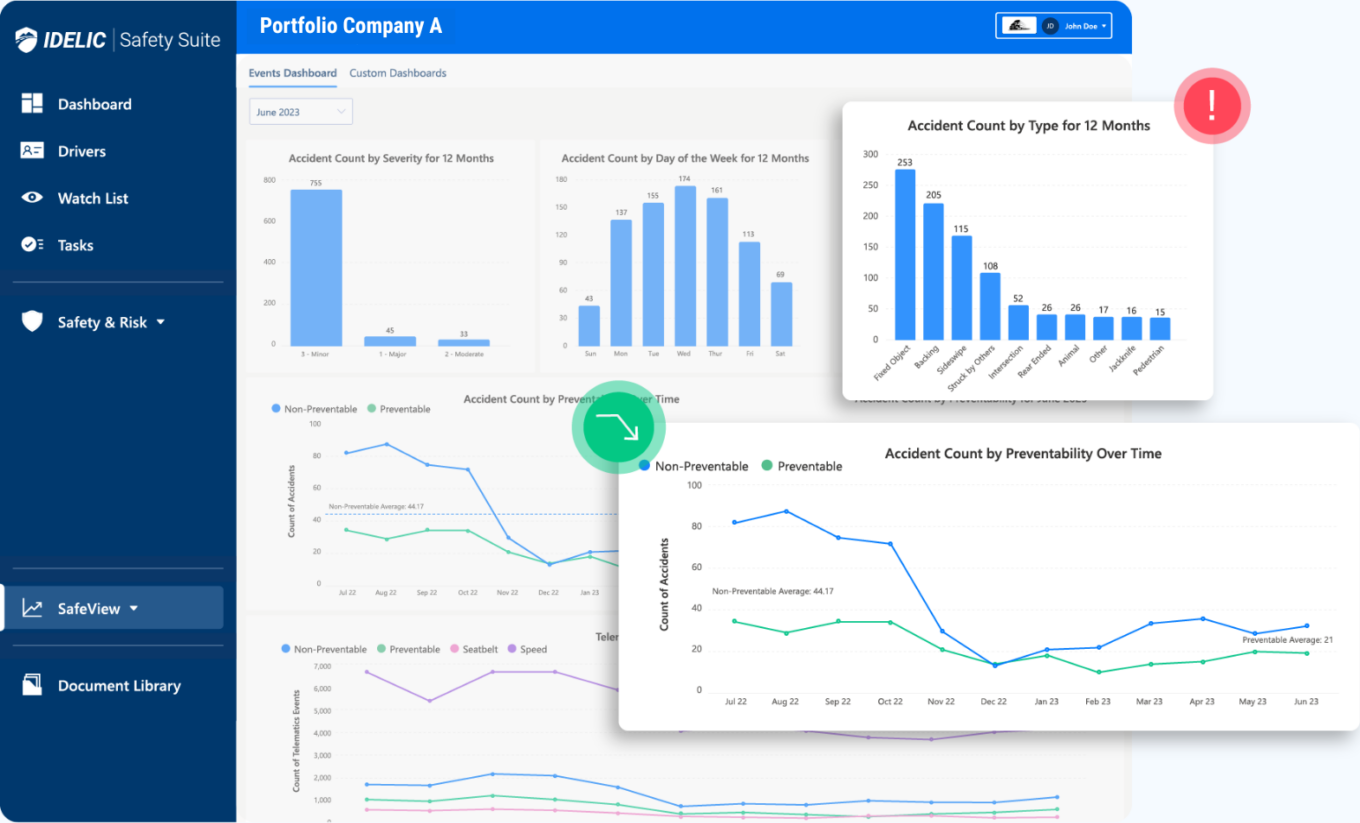
On April 23, Descartes Systems, a leading supply chain software provider, acquired Idelic, a Pittsburgh-based provider of AI-powered driver safety and performance management solutions for $28 million plus earnouts of up to $12 million. Idelic’s safety intelligence platform unifies day-to-day safety management activities such as training, monitoring, reporting and coaching into a single solution. It collects real-time, highly detailed event-level data through a connected network of more than 80 telematics, risk management and regulatory system integrations. The acquisition adds critical data to Descartes’ global logistics network and enhances Descartes’ final-mile footprint by adding advanced fleet safety capabilities and deep domain expertise.
Idelic’s safety intelligence dashboard
Source: Idelic.
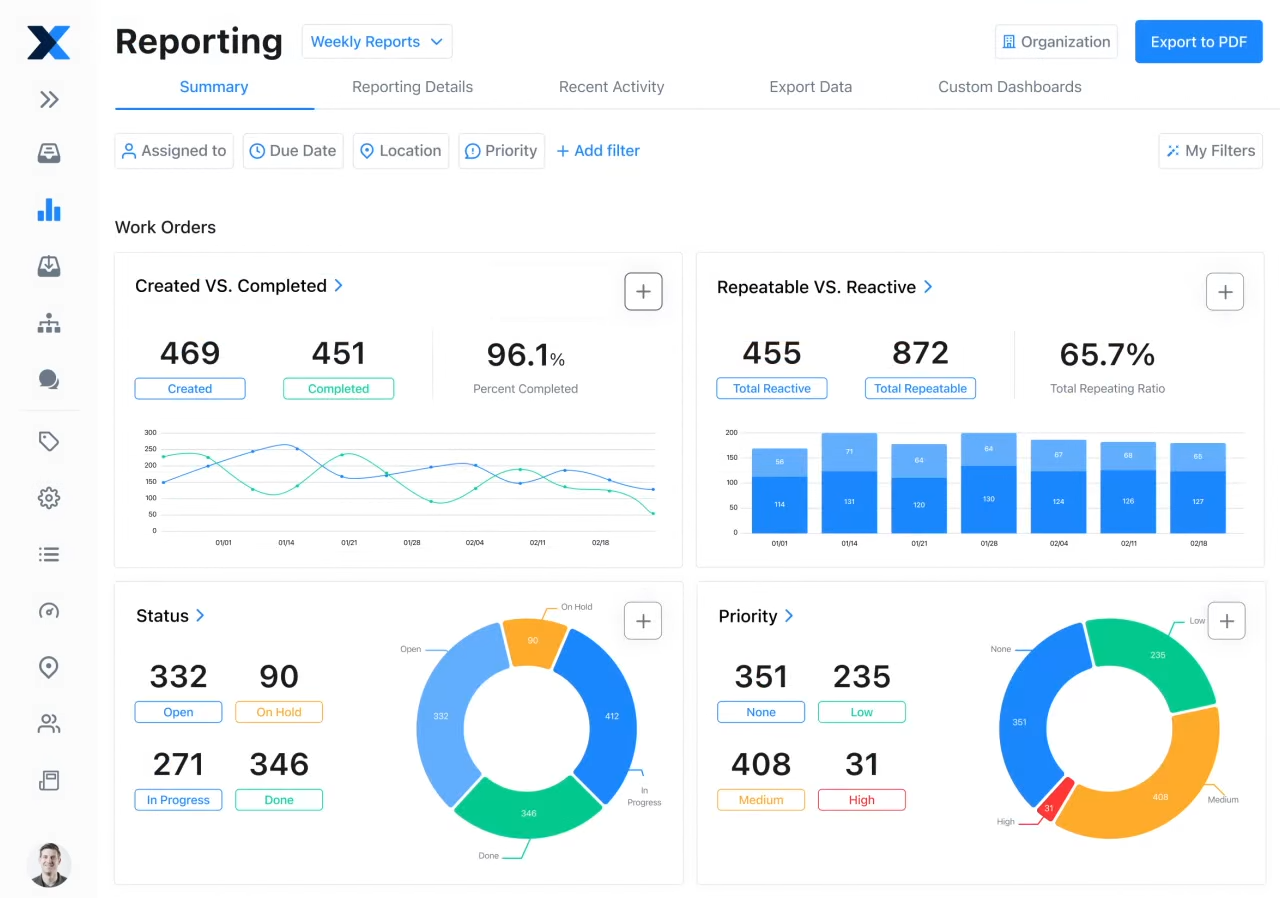
On May 28, MaintainX, a leading maintenance and operations solution, announced it would be acquired by design software company Autodesk (ADSK) in an all-cash transaction valued at approximately $3.6 billion. MaintainX is expected to close 2026 with over $135 million in annualized recurring revenue, implying the purchase price was at a premium 26.5 multiple. MaintainX is used by organizations to manage maintenance activity, asset information, inspections, work orders and operational workflows. Its solution is designed to capture valuable, high-frequency data on asset condition, maintenance history and performance in the field. The acquisition is part of Autodesk’s strategy to converge solutions for design, make and operations workflows. It will strengthen Autodesk’s ability to connect operations workflows with the broader life cycle, helping teams make faster, more informed decisions using its Autodesk Operations Solutions, which unify its operations capabilities.
MaintainX maintenance and asset management platform
Source: MaintainX.
Select recent M&A transactions (sorted by date of announcement, $ in millions)
| Date | Target | Target business description | Buyer | Enterprise value |
Enterprise value/rev. |
|---|---|---|---|---|---|
| 6/3/2026 | BrickHouse GPS | SaaS platform combining hardware-enabled telematics with fleet management software to deliver real-time visibility, driver safety and operational efficiency to fleet operators | Grady Bay Capital | Undisclosed | Undisclosed |
| 6/1/2026 | Stockfiller | Digital procurement and order-management platform targeted at food-industry businesses | Bridgepoint Group | Undisclosed | Undisclosed |
| 6/1/2026 | Results from Data | Data analytics, optimization and business intelligence services and custom analytics software targeted at trucking fleets and fleet departments | CLA | Undisclosed | Undisclosed |
| 5/28/2026 | MaintainX | Software to manage maintenance activity, asset information, inspections, work orders and operational workflows | Autodesk (ADSK) | $3,575.0 | 26.5x |
| 5/19/2026 | Gaea | Project management and supply chain solutions like supply chain execution, warehouse management and cloud based inventory | Argano | Undisclosed | Undisclosed |
| 5/8/2026 | Sedex | SaaS platform and related services to help companies map, assess and mitigate social and environmental risks in multi-tier supply chains | Apax Partners | Undisclosed | Undisclosed |
| 5/7/2026 | Teletrac Navman | Mobility platform for vehicle and equipment assets management that leverages AI to support transport and logistics, service fleets, and construction businesses | Respida Capital | $220.0 | Undisclosed |
| 5/4/2026 | Logaward | Supply chain execution platform providing no-code solutions to automate and manage logistics processes, enabling shippers and beneficial cargo owners to configure and execute their end-to-end processes | Shippeo | Undisclosed | Undisclosed |
| 5/4/2026 | Bendi | Data analytics platform that helps global supply chain tracking | Worldly | Undisclosed | Undisclosed |
| 4/30/2026 | Crown Data Systems | Transportation management software for air freight and time-critical delivery | Tenet | Undisclosed | Undisclosed |
| 4/23/2026 | Idelic | AI-powered driver safety and performance management | Descartes Systems | $40.0 | Undisclosed |
| 4/13/2026 | Carrier Logistics | Transportation and freight management software providing shipment management and final accounting for asset-based and multi-stop carriers | STG | Undisclosed | Undisclosed |
| 4/10/2026 | GreenSpark | Cloud-based software that offers inventory management, inventory tracking, sales modules, managing packing lists, bills of lading, streamlined invoicing and accounting integration | ReMatter | Undisclosed | Undisclosed |
| 4/9/2026 | LunaPath | AI-powered communication and automation tools for the logistics industry, including voice assistants, email automation, and related integrations | Project44 | Undisclosed | Undisclosed |
| 4/6/2026 | Honk | Platform for digital roadside assistance and vehicle logistics management including towing, fuel delivery, battery assessments, and vehicle recovery for various vehicle types such as motorcycles and electric and recreational vehicles | Frontenac | Undisclosed | Undisclosed |
| 4/2/2026 | Tealbook | Supplier data platform that automates the collection, verification, enrichment, and distribution of supplier data across enterprise systems | Supplier.io | Undisclosed | Undisclosed |
Source: Capital IQ, First Analysis.
Supply chain private placements: Notable transactions include Stord and Swarm Engineering
We highlight two noteworthy recent private placement announcements in the supply chain technology sector.
On May 26, Stord announced a $250 million Series F funding at a $3 billion valuation, led by existing investors and including Strike Capital, Kleiner Perkins, Founders Fund, Franklin Templeton, Baillie Gifford, G Squared, Bond and Lux. Stord provides independent brands a complete commerce technology and service stack including fulfillment network, software, and AI to deliver consumer experiences that rival Amazon Prime’s. It operates nearly 100 fulfillment facilities and processes over $15 billion in gross merchandise value annually across more than 1,000 customers. Stord noted it believes it has moved faster on AI adoption than the broader industry, enabling it to triple its software business in 2025 and double new bookings in the 2026 first quarter.
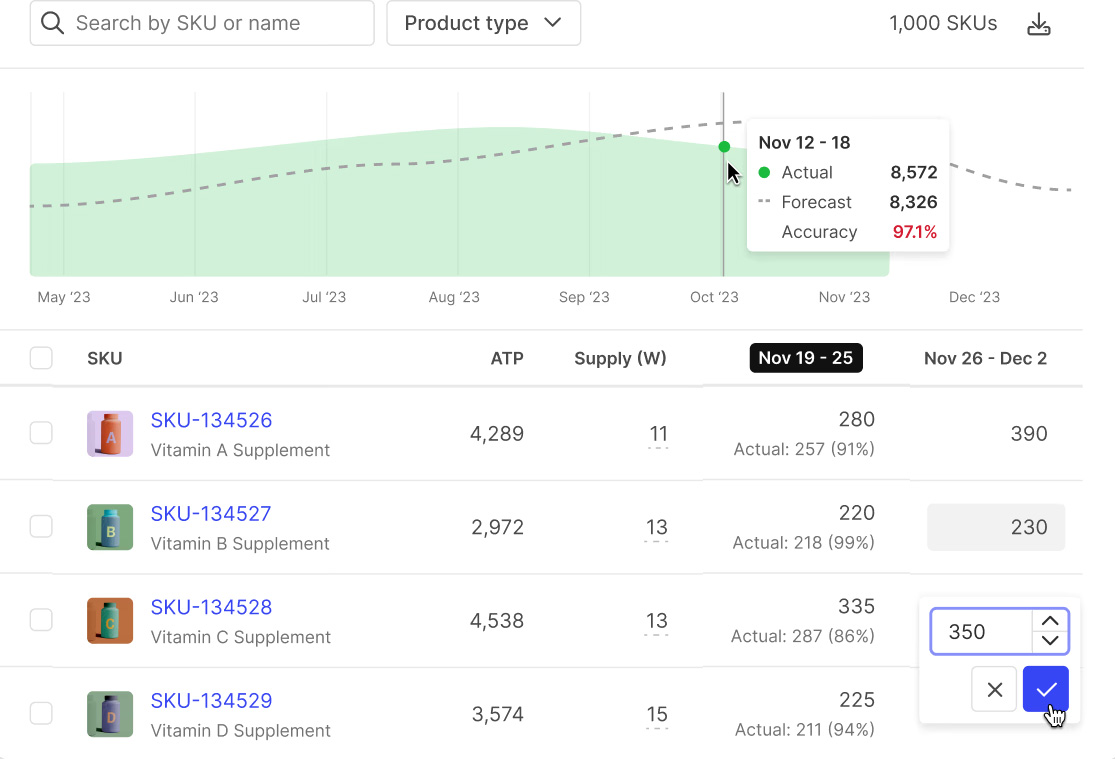
Stord connects disparate systems to get full visibility into the entire supply chain, including warehouse management, consumer experience and inventory planning
Source: Stord.
On June 10, Swarm Engineering announced it had raised $10 million in Series A funding led by S2G Investments and AgRogue Growth Partners, with participation from Radicle Growth, Grit Road Partners, Middleland Capital, Open Prairie, Serra Ventures, and Trailhead Capital. Swarm combines domain-trained AI agents and optimization algorithms to help agrifood and manufacturing enterprise operations teams make faster, higher-quality decisions across supply chains, workforces and logistics. Swarm’s solution is built on domain knowledge specific to the agrifood and manufacturing sectors. The new capital will accelerate Swarm’s use of AI in decision intelligence across new use cases in agrifood and manufacturing. Additionally, it will help to scale go-to-market operations and deepen integrations with leading enterprise resource planning and supply chain systems to reduce time to value for customers.
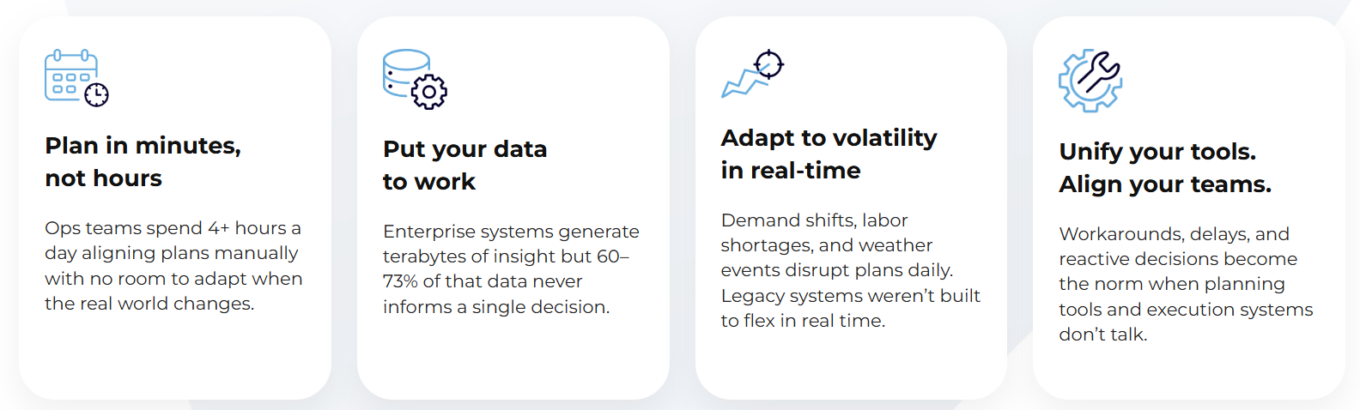
Swarm’s AI-powered optimization platform automates complex operational decisions across supply chain, workforce, production and logistics
Source: Swarm Engineering.
Select recent private placements (sorted by date of announcement, $ in millions)
| Date | Company | Business description | Investors | Raise type | Amount raised |
Total amount raised |
|---|---|---|---|---|---|---|
| 6/23/2026 | Eaigle | AI platform for supply chain and logistics automating vehicle access control, yard operations, and asset tracking | Noro-Moseley; Boreal Ventures; In Revenue Capital | Growth | Undisclosed | Undisclosed |
| 6/17/2026 | SubBase | Construction procurement software that manages material and equipment workflows | Fika Ventures; Fintop | Series A | $7.0 | $11.0 |
| 6/10/2026 | Swarm Engineering | Domain-trained AI agents and optimization algorithms to help agrifood and manufacturing enterprise operations teams make faster, higher-quality decisions across supply chains, workforces and logistics | Open Prairie; Serra Ventures; Middleland Capital; S2G; Radicle Growth; Trailhead Capital; Grit Road; AgRogue Growth | Series A | $10.0 | $28.3 |
| 5/26/2026 | Stord | Complete commerce technology and service stack including fulfillment network, software, and AI for independent brands | Kleiner Perkins; Franklin Templeton; Lux Capital; Baillie Gifford; Founders Fund; G Squared; Strike Capital; Bond | Series F | $250.0 | $813.8 |
| 5/22/2026 | LSPedia | Compliance, traceability, serialization and supply chain management software for the pharmaceutical industry | Bregal Sagemount | Series A | Undisclosed | Undisclosed |
| 5/21/2026 | UpKeep | AI powered enterprise asset management and maintenance management solutions for facility maintenance teams | Accel-KKR | Growth | Undisclosed | Undisclosed |
| 5/20/2026 | BravoTran | Document management and automation platform for freight forwarders | Arthur Ventures | Growth | Undisclosed | Undisclosed |
| 5/19/2026 | Aera Technology | Decision intelligence platform that use AI to automate procurement optimization, supply chain resilience and cost management | Accenture (ACN) | Growth | Undisclosed | Undisclosed |
| 5/14/2026 | Radar | Platform that automates and monitors inventory management, analytics, and checkout in physical stores | Align Ventures; Nimble Partners; Gideon Strategic Partners | Series B | $170.0 | $314.8 |
| 5/4/2026 | GingerControl | AI-powered trade compliance infrastructure for importers, exporters, and customs brokers | Backed VC | Venture | $2.1 | $2.1 |
| 4/30/2026 | Saudara AI | AI-native sourcing broker that connects American brands with vetted overseas manufacturers | Y Combinator | Accelerator | $0.5 | $0.5 |
| 4/29/2026 | Haladir | AI decision intelligence for logistics software across supply chain, warehouses, trucking, and air and ocean freight | Sunflower Capital; Y Combinator; SV Angel; BoxGroup; Susa Ventures; Xpress Ventures; Browder Capital; Valkyrie | Seed | $4.3 | $4.3 |
| 4/29/2026 | Cargofy Inc. | AI-powered logistics automation tools for transportation companies, focusing on fleet management, load allocation, and dispatch automation | u.ventures; Movens Capital; Toloka | Series A | $6.0 | $8.8 |
| 4/16/2026 | Fastbreak AI | AI-based scheduling and logistics software offering optimization, scheduling goals, metric reporting, venue availability, fairness scheduling and schedule modification | USTA Ventures | Venture | Undisclosed | Undisclosed |
| 4/7/2026 | Two Boxes | Returns processing reverse logistics software that helps brands and third-party logistics providers manage, inspect and restock returned products more efficiently | Peterson Ventures; Matchstick Ventures; Assembly Ventures | Venture | $3.2 | $13.0 |
Source: Capital IQ, First Analysis.
Request full report
To access the full report, please provide your contact information in the form below. Thank you for your interest in First Analysis research.